
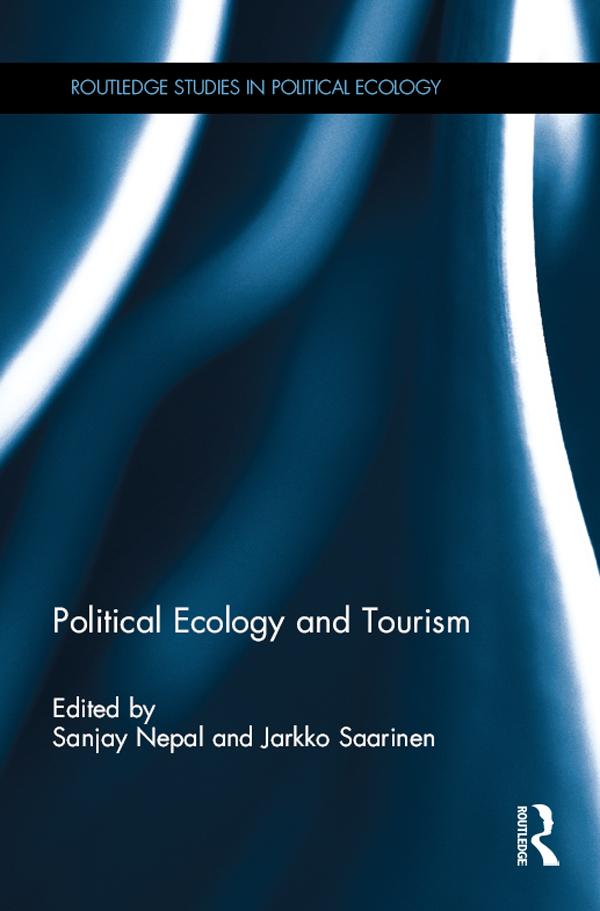
Political ecology explicitly addresses the relations between the social and the natural, arguing that social and environmental conditions are deeply and inextricably linked. Its emphasis on the material state of nature as the outcome of political processes, as well as the construction and understanding of nature itself as political is greatly relevant to tourism.
Very few tourism scholars have used political ecology as a lens to examine tourism-centric natural resource management issues. This book brings together experts in the field, with a foreword from Piers Blaikie, to provide a global exploration of the application of political ecology to tourism. It addresses the underlying issues of power, ownership, and policies that determine the ways in which tourism development decisions are made and implemented. Furthermore, contributions document the complex array of relationships between tourism stakeholders, including indigenous communities, and multiple scales of potential conflicts and compromises.
This groundbreaking book covers 15 contributions organized around four cross-cutting themes of communities and livelihoods; class, representation, and power; dispossession and displacement; and, environmental justice and community empowerment. This book will be of great interest to students and scholars in tourism, geography, anthropology, sociology, environmental studies, and natural resources management.
Betaal eenvoudig met kaart, Klarna, Apple Pay of Google Pay. Niet tevreden? Je hebt altijd 14 dagen bedenktijd. Lees meer in onze voorwaarden. Heb je vragen, mail ons dan via hello@memmo.org.
Memmo maakt studeren makkelijker – waar je ook bent ter wereld. Wij brengen je cursusboeken en slimme studietools samen op één plek: samenvattingen, quizzen, podcasts en flashcards. En Ted, je studievriend die antwoord geeft op alles wat je je afvraagt. Meer dan 50.000 studenten studeren hier al – gebouwd om je sneller te laten leren en minder stress te geven.