
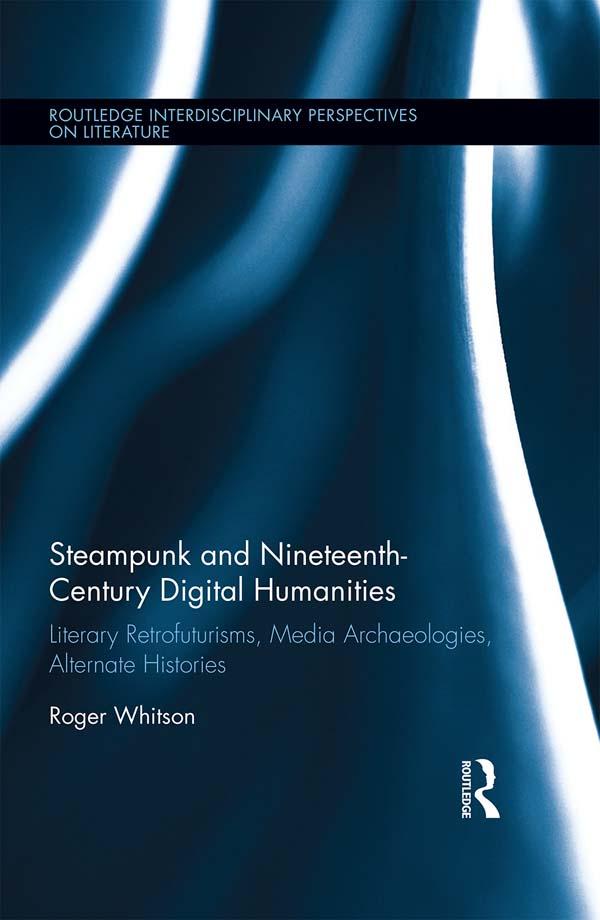
Steampunk is more than a fandom, a literary genre, or an aesthetic. It is a research methodology turning history inside out to search for alternatives to the progressive technological boosterism sold to us by Silicon Valley. This book turns to steampunk's quirky temporalities to embrace diverse genealogies of the digital humanities and to unite their methodologies with nineteenth-century literature and media archaeology. The result is nineteenth-century digital humanities, a retrofuturist approach in which readings of steampunk novels like William Gibson and Bruce Sterling's The Difference Engine and Ken Liu's The Grace of Kings collide with nineteenth-century technological histories like Charles Babbage's use of the difference engine to enhance worker productivity and Isabella Bird's spirit photography of alternate history China.
Along the way, Steampunk and Nineteenth-Century Digital Humanities considers steampunk as a public form of digital humanities scholarship and activism, examining projects like Kinetic Steam Works's reconstruction of Henri Giffard's 1852 steam-powered airship, Jake von Slatt's use of James Wimshurst's 1880 designs to create an electric influence machine, and the queer steampunk activism of fans appearing at conventions around the globe. Steampunk as a digital humanities practice of repurposing reacts to the growing sense of multiple non-human temporalities mediating our human histories: microtemporal electricities flowing through our computer circuits, mechanical oscillations marking our work days, geological stratifications and cosmic drifts extending time into the millions and billions of years. Excavating the entangled, anachronistic layers of steampunk practice from video games like Bioshock Infinite to marine trash floating off the shore of Los Angeles and repurposed by media artist Claudio Garzón into steampunk submarines, Steampunk and Nineteenth-Century Digital Humanities uncovers the various technological temporalities and multicultural retrofutures illuminating many alternate histories of the digital humanities.
Betaal eenvoudig met kaart, Klarna, Apple Pay of Google Pay. Niet tevreden? Je hebt altijd 14 dagen bedenktijd. Lees meer in onze voorwaarden. Heb je vragen, mail ons dan via hello@memmo.org.
Memmo maakt studeren makkelijker – waar je ook bent ter wereld. Wij brengen je cursusboeken en slimme studietools samen op één plek: samenvattingen, quizzen, podcasts en flashcards. En Ted, je studievriend die antwoord geeft op alles wat je je afvraagt. Meer dan 50.000 studenten studeren hier al – gebouwd om je sneller te laten leren en minder stress te geven.