
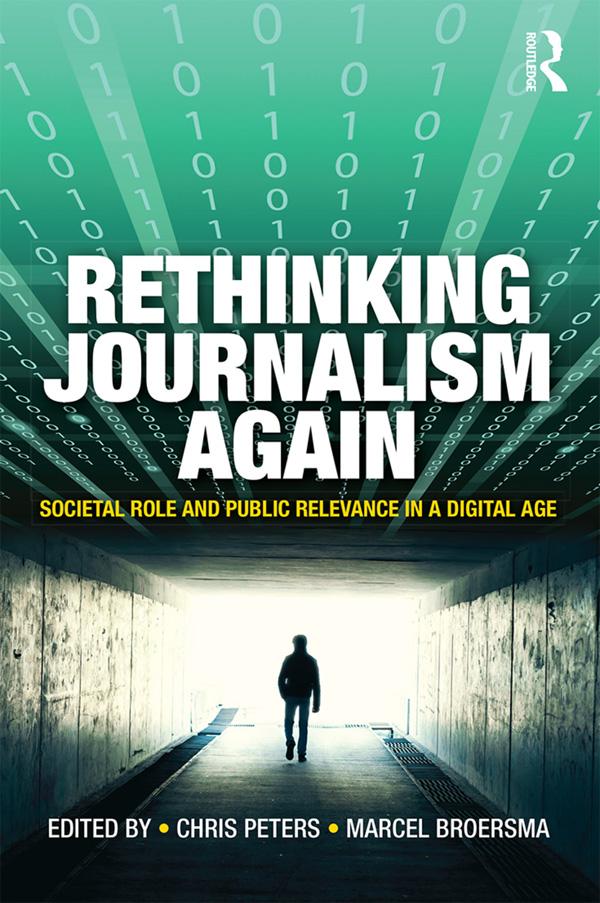
It’s easy to make a rhetorical case for the value of journalism. Because, it is a necessary precondition for democracy; it speaks to the people and for the people; it informs citizens and enables them to make rational decisions; it functions as their watchdog on government and other powers that be.
But does rehashing such familiar rationales bring journalism studies forward? Does it contribute to ongoing discussions surrounding journalism’s viability going forth? For all their seeming self-evidence, this book considers what bearing these old platitudes have in the new digital era. It asks whether such hopeful talk really reflects the concrete roles journalism now performs for people in their everyday lives. In essence, it poses questions that strike at the core of the idea of journalism itself. Is there a singular journalism that has one well-defined role in society? Is its public mandate as strong as we think?
The internationally-renowned scholars comprising the collection address these recurring concerns that have long-defined the profession and which journalism faces even more acutely today. By discussing what journalism was, is, and (possibly) will be, this book highlights key contemporary areas of debate and tackles on-going anxieties about its future.
Betaal eenvoudig met kaart, Klarna, Apple Pay of Google Pay. Niet tevreden? Je hebt altijd 14 dagen bedenktijd. Lees meer in onze voorwaarden. Heb je vragen, mail ons dan via hello@memmo.org.
Memmo maakt studeren makkelijker – waar je ook bent ter wereld. Wij brengen je cursusboeken en slimme studietools samen op één plek: samenvattingen, quizzen, podcasts en flashcards. En Ted, je studievriend die antwoord geeft op alles wat je je afvraagt. Meer dan 50.000 studenten studeren hier al – gebouwd om je sneller te laten leren en minder stress te geven.