
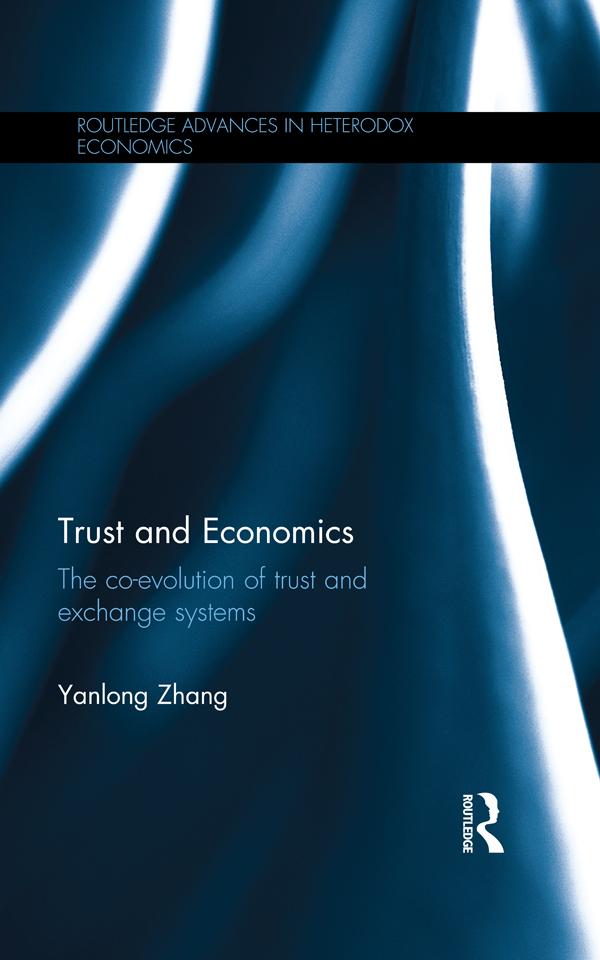
A lot of recent attention has been given to one of the central paradoxes of trust: namely how people can restrict self-interest in order to trust. Existing perspectives, theories, and models offer partial explanations, but this volume presents a novel framework that expands on the findings of recent studies of trust and exchange. This book offers a new angle for the understanding of exchange and trust in an interactive context, describes the interactive characteristics of trust in exchange systems, and develops a theory explaining the co-evolution of trust and exchange systems.
A new framework is used to incorporate the theory of systems of trust and evolutionary game-theoretical approach to investigate four important questions: How can trust emerge in exchange when people pursue self-interest? After its emergence, how does exchange affect trust in a dynamic process? When are dynamics of trust stable? Do interactive trust phenomena differ under different exchange systems? This book concludes with a discussion of the implications of the theoretical findings for three areas: the improvement of trust, potential economic growth, and mechanism design in exchange systems.
This volume makes a significant contribution to the literature on evolutionary and institutional economics and is suitable for those who have an interest in political economy, economy theory and philosophy as well as economic psychology.
Betaal eenvoudig met kaart, Klarna, Apple Pay of Google Pay. Niet tevreden? Je hebt altijd 14 dagen bedenktijd. Lees meer in onze voorwaarden. Heb je vragen, mail ons dan via hello@memmo.org.
Memmo maakt studeren makkelijker – waar je ook bent ter wereld. Wij brengen je cursusboeken en slimme studietools samen op één plek: samenvattingen, quizzen, podcasts en flashcards. En Ted, je studievriend die antwoord geeft op alles wat je je afvraagt. Meer dan 50.000 studenten studeren hier al – gebouwd om je sneller te laten leren en minder stress te geven.