
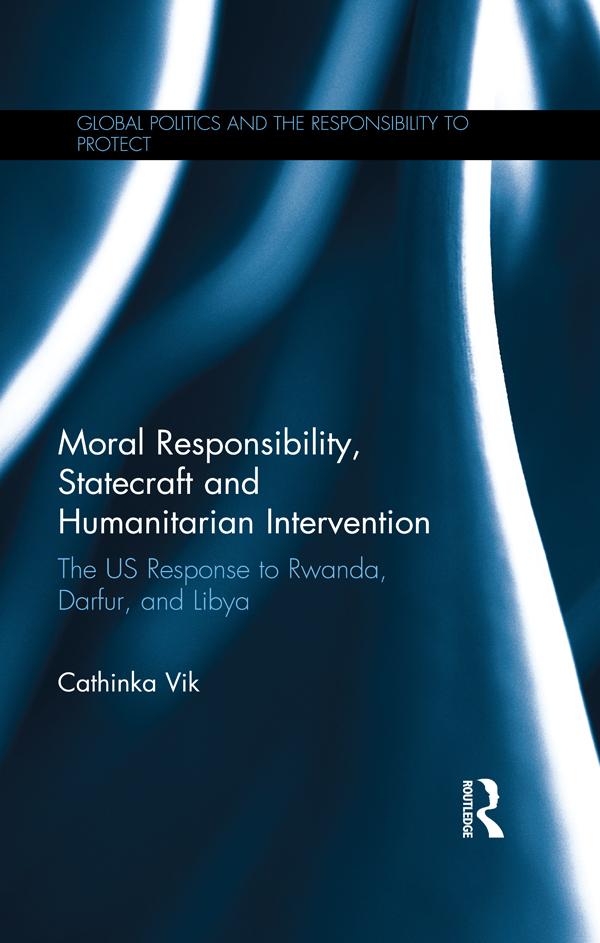
This book explores the moral complexity of statecraft in the context of decision-making on armed intervention in the post-Cold War era.
This book adds to the debate on humanitarian intervention by analyzing the moral complexity of statecraft when confronted with situations of severe human rights violations. Through a comparative case study of President Bill Clinton administration’s failure to intervene in the Rwanda genocide (1994), the George W. Bush administration’s tepid response to the Darfur atrocities (2003-07), and the Barack Obama administration’s leadership behind the limited U.N. intervention in Libya (2011), it explores the factors – domestic and international – that influence decision-making about humanitarian intervention. These cases show, not only how international moral concerns often compete with interest-based and domestic concerns, but how decision-makers are often confronted by competing moral imperatives. In such situations, it is often not clear which imperatives should be followed. In an increasingly interconnected world, this book examines how we expect state leaders to balance different moral responsibilities.
This book will be of much interest to students of humanitarian intervention, the Responsibility to Protect, human rights, US foreign policy, African politics and IR in general.
Betaal eenvoudig met kaart, Klarna, Apple Pay of Google Pay. Niet tevreden? Je hebt altijd 14 dagen bedenktijd. Lees meer in onze voorwaarden. Heb je vragen, mail ons dan via hello@memmo.org.
Memmo maakt studeren makkelijker – waar je ook bent ter wereld. Wij brengen je cursusboeken en slimme studietools samen op één plek: samenvattingen, quizzen, podcasts en flashcards. En Ted, je studievriend die antwoord geeft op alles wat je je afvraagt. Meer dan 50.000 studenten studeren hier al – gebouwd om je sneller te laten leren en minder stress te geven.