
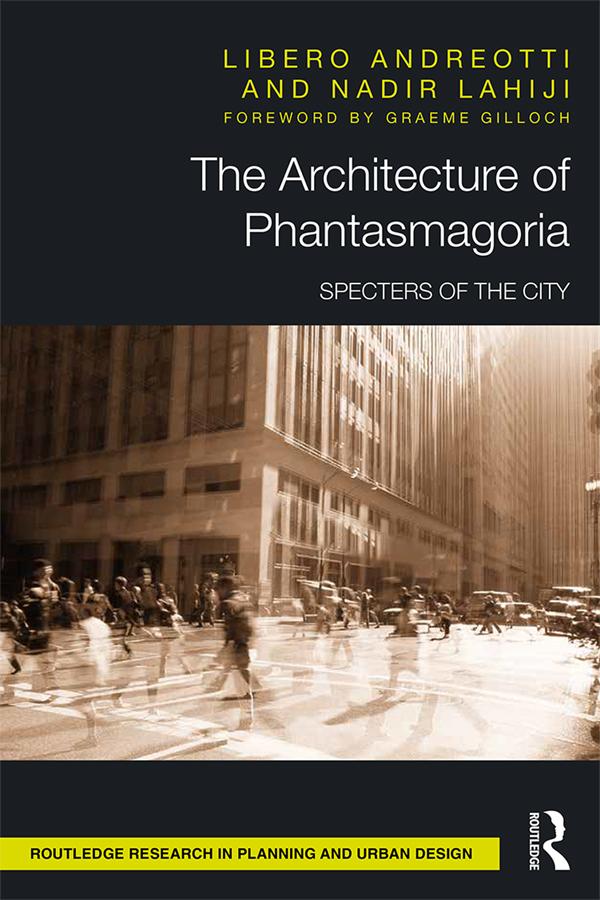
In a time of mass-mediated modernity, the city becomes, almost by definition, a constitutively ‘mediated’ city. Today, more than ever before, the omnipresence of media in every sphere of culture is creating a new urban ontology, saturating, fracturing, and exacerbating the manifold experience of city life. The authors describe this condition as one of 'hyper-mediation' – a qualitatively new phase in the city’s historical evolution. The concept of phantasmagoria has pride of place in their study; using it as an all-embracing explanatory framework, they explore its meanings as a critical category to understand the culture, and the architecture, of the contemporary city.
Andreotti and Lahiji argue that any account of architecture that does not include understanding the role and function of media and its impact on the city in the present ‘tele-technological-capitalist’ society is fundamentally flawed and incomplete. Their approach moves from Walter Benjamin, through the concepts of phantasmagoria and of media – as theorized also by Theodor Adorno, Siegfried Kracauer, and a new generation of contemporary critics – towards a new socio-critical and aesthetic analysis of the mediated space of the contemporary city.
Betaal eenvoudig met kaart, Klarna, Apple Pay of Google Pay. Niet tevreden? Je hebt altijd 14 dagen bedenktijd. Lees meer in onze voorwaarden. Heb je vragen, mail ons dan via hello@memmo.org.
Memmo maakt studeren makkelijker – waar je ook bent ter wereld. Wij brengen je cursusboeken en slimme studietools samen op één plek: samenvattingen, quizzen, podcasts en flashcards. En Ted, je studievriend die antwoord geeft op alles wat je je afvraagt. Meer dan 50.000 studenten studeren hier al – gebouwd om je sneller te laten leren en minder stress te geven.