
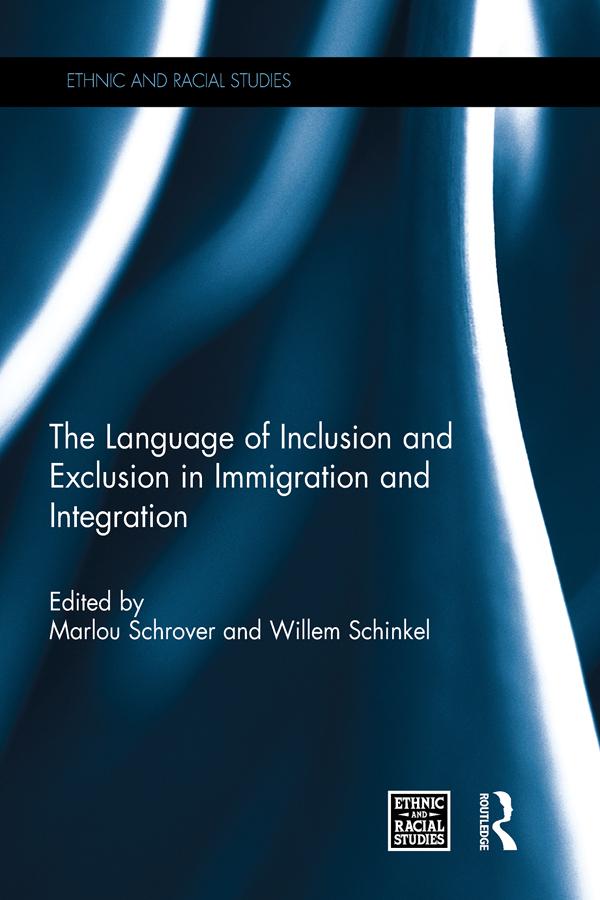
This collection provides an overview of some of the most relevant concepts in the study of the language of inclusion and exclusion, specifically with a view to the functioning of nation-state categories. Categorizations, words, and phrases are constantly renewed with the intention to exclude (mostly) or to include (rarely), promulgating problematizations that highlight discursive distinctions between in-groups and out-groups. Such discursive constructions and the practices through which they are effectuated are sites of symbolic power, and their study reveals the workings of power. Historical analysis of the language of inclusion and exclusion can help elucidate contemporary transformations of discursive power.
The chapters in this volume discuss forms of discursive problematization such as defining, claiming, legitimizing, expanding, sensationalization and suggestion, and it connects these to the discursive drawing of boundaries, focusing on discursive constructions of ‘illegality’, race, class, gender, immigrant integration and transnationalism. As state categorizations continuously differ, both the historical analysis of their genesis, functioning and transformation, and the contemporary analysis of their practical effectuation are crucial to an understanding of inclusion and exclusion.
This book was originally published as a special issue of Ethnic and Racial Studies.
Betaal eenvoudig met kaart, Klarna, Apple Pay of Google Pay. Niet tevreden? Je hebt altijd 14 dagen bedenktijd. Lees meer in onze voorwaarden. Heb je vragen, mail ons dan via hello@memmo.org.
Memmo maakt studeren makkelijker – waar je ook bent ter wereld. Wij brengen je cursusboeken en slimme studietools samen op één plek: samenvattingen, quizzen, podcasts en flashcards. En Ted, je studievriend die antwoord geeft op alles wat je je afvraagt. Meer dan 50.000 studenten studeren hier al – gebouwd om je sneller te laten leren en minder stress te geven.