
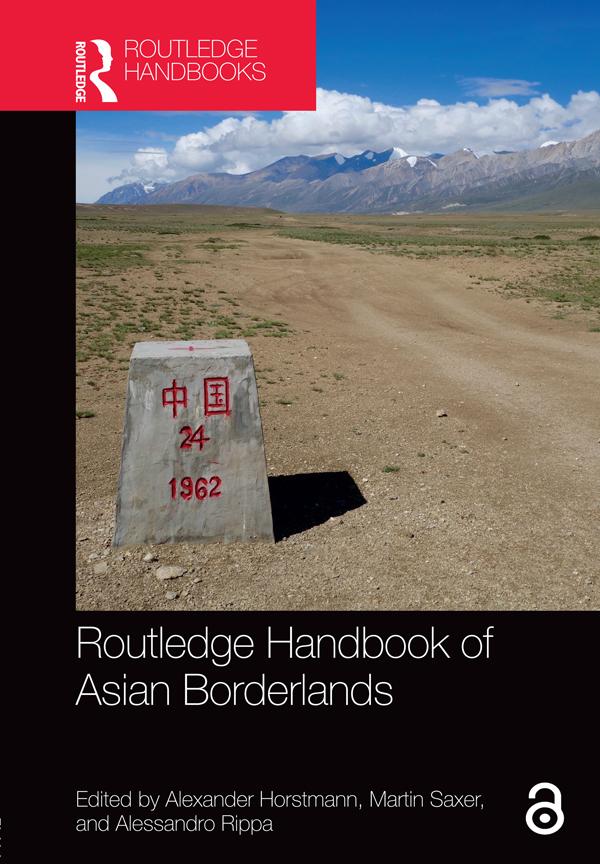
In Asia, where authoritarian-developmental states have proliferated, statehood and social control are heavily contested in borderland spaces. As a result, in the post-Cold War world, borders have not only redefined Asian incomes and mobilities, they have also rekindled neighbouring relations and raised questions about citizenship and security.
The contributors to the Routledge Handbook of Asian Borderlands highlight some of these processes taking place at the fringe of the state. Offering an array of comparative perspectives of Asian borders and borderlands in the global context, this handbook is divided into thematic sections, including:
-
Livelihoods, commodities and mobilities
-
Physical land use and agrarian transformations
- Borders and boundaries of the state and the notion of statelessness
- Re-conceptualizing trade and the economy in the borderlands
- The existence and influence of humanitarians, religions, and NGOs
- The militarization of borderlands
Causing us to rethink and fundamentally question some of the categories of state, nation, and the economy, this is an important resource for students and scholars of Asian Studies, Border Studies, Social and Cultural Studies, and Anthropology.
Chapter 12 of this book is freely available as a downloadable Open Access PDF at http://www.taylorfrancis.com under a Creative Commons Attribution-Non Commercial-No Derivatives (CC-BY-NC-ND) 4.0 license.
Betaal eenvoudig met kaart, Klarna, Apple Pay of Google Pay. Niet tevreden? Je hebt altijd 14 dagen bedenktijd. Lees meer in onze voorwaarden. Heb je vragen, mail ons dan via hello@memmo.org.
Memmo maakt studeren makkelijker – waar je ook bent ter wereld. Wij brengen je cursusboeken en slimme studietools samen op één plek: samenvattingen, quizzen, podcasts en flashcards. En Ted, je studievriend die antwoord geeft op alles wat je je afvraagt. Meer dan 50.000 studenten studeren hier al – gebouwd om je sneller te laten leren en minder stress te geven.