
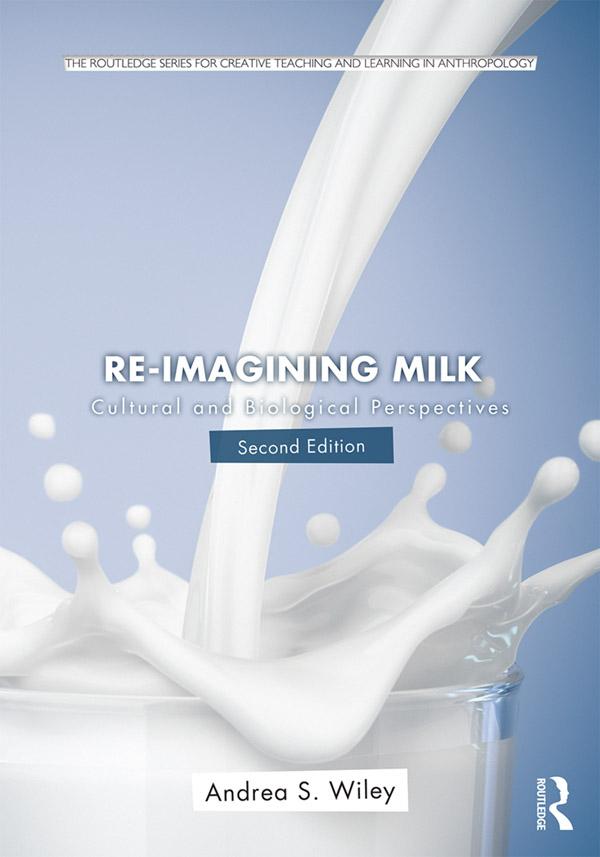
Milk is a fascinating food: it is produced by mothers of each mammalian species for consumption by nursing infants of that species, yet many humans drink the milk of another species (mostly cows) and they drink it throughout life. Thus we might expect that this dietary practice has some effects on human biology that are different from other foods. In Re-imagining Milk Wiley considers these, but also puts milk-drinking into a broader historical and cross-cultural context. In particular, she asks how dietary policies promoting milk came into being in the U.S., how they intersect with biological variation in milk digestion, how milk consumption is related to child growth, and how milk is currently undergoing globalizing processes that contribute to its status as a normative food for children (using India and China as examples). Wiley challenges the reader to re-evaluate their assumptions about cows' milk as a food for humans. Informed by both biological and social theory and data, Re-imagining Milk provides a biocultural analysis of this complex food and illustrates how a focus on a single commodity can illuminate aspects of human biology and culture.
Betaal eenvoudig met kaart, Klarna, Apple Pay of Google Pay. Niet tevreden? Je hebt altijd 14 dagen bedenktijd. Lees meer in onze voorwaarden. Heb je vragen, mail ons dan via hello@memmo.org.
Memmo maakt studeren makkelijker – waar je ook bent ter wereld. Wij brengen je cursusboeken en slimme studietools samen op één plek: samenvattingen, quizzen, podcasts en flashcards. En Ted, je studievriend die antwoord geeft op alles wat je je afvraagt. Meer dan 50.000 studenten studeren hier al – gebouwd om je sneller te laten leren en minder stress te geven.