
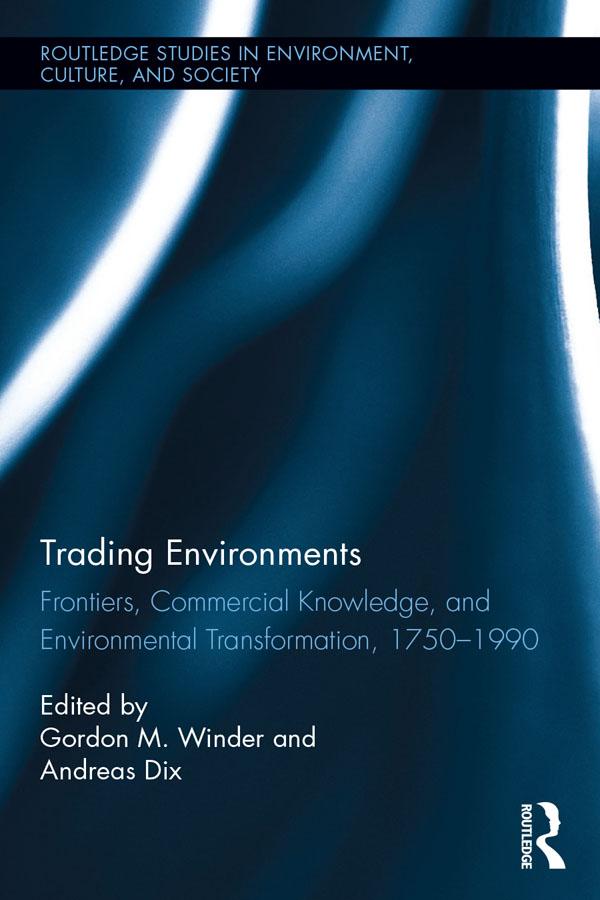
This volume examines dynamic interactions between the calculative and speculative practices of commerce and the fruitfulness, variability, materiality, liveliness and risks of nature. It does so in diverse environments caught up in new trading relationships forged on and through frontiers for agriculture, forestry, mining and fishing. Historical resource frontiers are understood in terms of commercial knowledge systems organized as projects to transform landscapes and environments. The book asks: how were environments traded, and with what environmental and landscape consequences? How have environments been engineered, standardized and transformed within past trading systems? What have been the successes and failures of economic knowledge in dealing with resource production in complex environments? It considers cases from northern Europe, North and South America, Central Africa and New Zealand in the period between 1750 and 1990, and the contributors reflect on the effects of transnational commodity chains, competing economic knowledge systems, environmental ignorance and learning, and resource exploitation. In each case they identify tensions, blind spots, and environmental learning that plagued commercial projects on frontiers.
Betaal eenvoudig met kaart, Klarna, Apple Pay of Google Pay. Niet tevreden? Je hebt altijd 14 dagen bedenktijd. Lees meer in onze voorwaarden. Heb je vragen, mail ons dan via hello@memmo.org.
Memmo maakt studeren makkelijker – waar je ook bent ter wereld. Wij brengen je cursusboeken en slimme studietools samen op één plek: samenvattingen, quizzen, podcasts en flashcards. En Ted, je studievriend die antwoord geeft op alles wat je je afvraagt. Meer dan 50.000 studenten studeren hier al – gebouwd om je sneller te laten leren en minder stress te geven.