
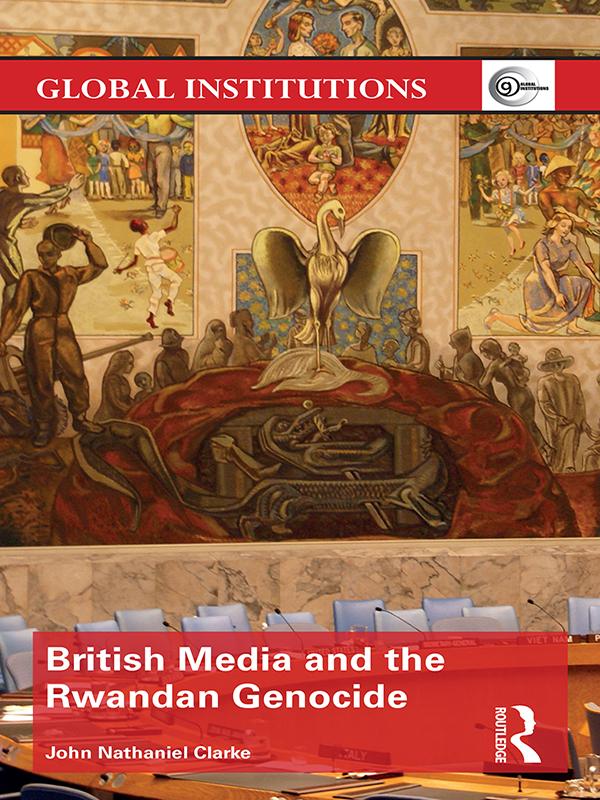
Throughout the 1990s, humanitarian interventionism sat at a crossroads, where ideas about rights and duties within and beyond borders collided with an international reality of civil conflict where the most basic human rights were violated in the most brutal manner. This growing awareness of humanitarian crises has been enabled by a more globalized media which increasingly shapes public perceptions of distant crises, public opinion, and political decision-making.
Clarke examines the extent to which the public discourse, and particular concepts, including those of an ethical and legal nature, influenced British newspaper coverage of the 1994 crisis in Rwanda, and, in turn, the extent to which that coverage influenced the British Parliament’s response to the crisis. Through his development and application of a broader methodological approach that combines both quantitative and qualitative analyses, the book offers a fuller understanding of the relationship between media coverage, parliamentary debate, and policy formulation, and the central role that the globalized media plays in this process.
Integrating ethics, law and empirical analysis of the media to obtain a more cohesive understanding of the chemistry of the media-public policy nexus, this work will be of interest to graduates and scholars in a range of areas, including Genocide Studies, the Responsibility to Protect, the Media & Politics and International Relations.
Betaal eenvoudig met kaart, Klarna, Apple Pay of Google Pay. Niet tevreden? Je hebt altijd 14 dagen bedenktijd. Lees meer in onze voorwaarden. Heb je vragen, mail ons dan via hello@memmo.org.
Memmo maakt studeren makkelijker – waar je ook bent ter wereld. Wij brengen je cursusboeken en slimme studietools samen op één plek: samenvattingen, quizzen, podcasts en flashcards. En Ted, je studievriend die antwoord geeft op alles wat je je afvraagt. Meer dan 50.000 studenten studeren hier al – gebouwd om je sneller te laten leren en minder stress te geven.