
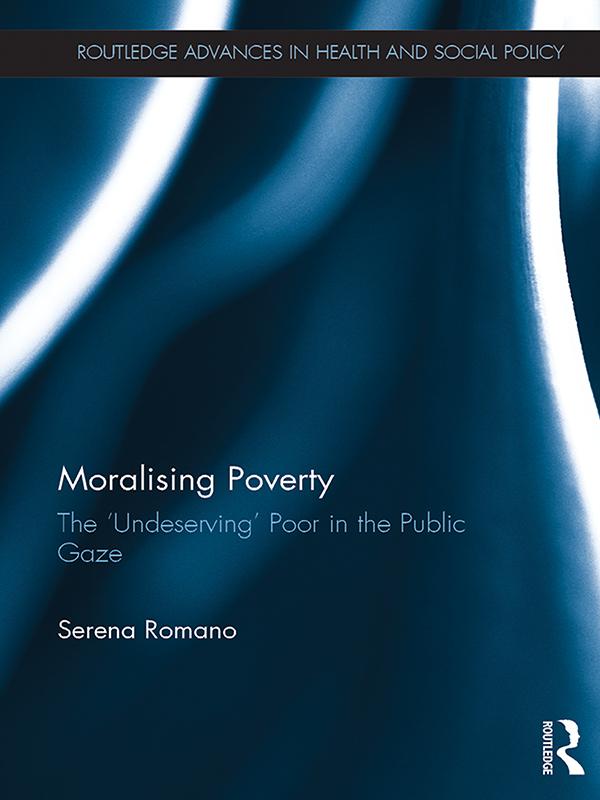
Do we judge the poor? Do we fear them? Do we have a moral obligation to help those in need? The moral and social grounds of solidarity and deservedness in relation to aid for poor people are rarely steady. This is particularly true under contemporary austerity reforms, where current debates question exactly who is most ‘deserving’ of protection in times of crisis. These arguments have accompanied a rise in the production of negative and punitive sentiments towards the poor.
This book breaks new ground in the discussion of the moral dimension of poverty and its implications for the treatment of the poor in mature welfare states, drawing upon the diverse political, social and symbolic constructions of deservedness and otherness. It takes a new look at the issue of poverty from the perspective of public policy, media and public opinion. It also examines, in a topical manner, the various ways in which certain factions contribute to the production of stereotyped representations of poverty and to the construction of boundaries between ‘insiders’ and ‘outsiders’ in our society. Case studies from the UK and Italy are used to examine these issues, and to understand the impact that a moralising of poverty has on the everyday experiences of the poor.
This is valuable reading for students and researchers interested in contemporary social work, social policy and welfare systems.
Betaal eenvoudig met kaart, Klarna, Apple Pay of Google Pay. Niet tevreden? Je hebt altijd 14 dagen bedenktijd. Lees meer in onze voorwaarden. Heb je vragen, mail ons dan via hello@memmo.org.
Memmo maakt studeren makkelijker – waar je ook bent ter wereld. Wij brengen je cursusboeken en slimme studietools samen op één plek: samenvattingen, quizzen, podcasts en flashcards. En Ted, je studievriend die antwoord geeft op alles wat je je afvraagt. Meer dan 50.000 studenten studeren hier al – gebouwd om je sneller te laten leren en minder stress te geven.