
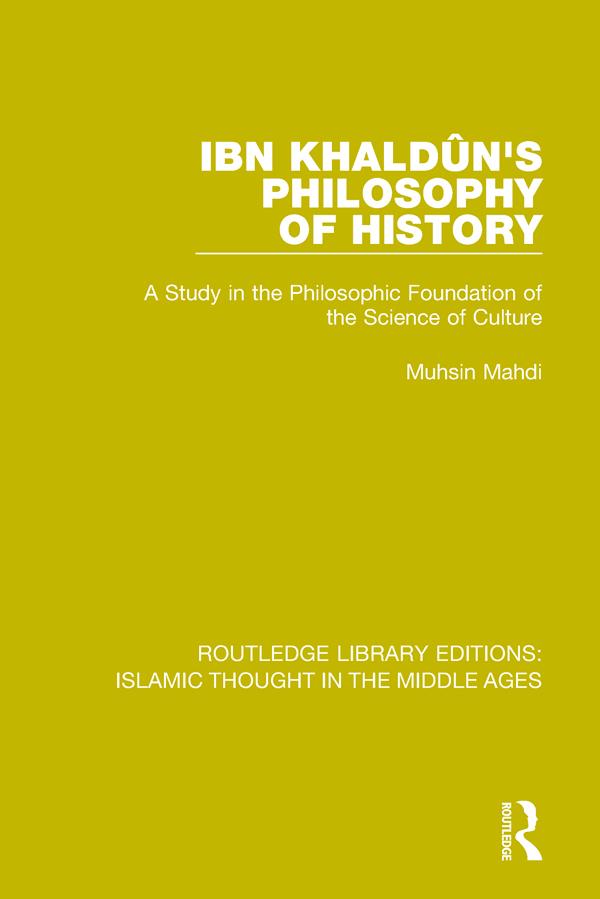
This book, first published in 1957, is the study of 14th-century Arab historian Ibn Khaldun, who founded a special science to consider history and culture, based on the philosophy of Plato and Aristotle and their Muslim followers. In no other field has the revolt of modern Western thought against traditional philosophy been so far-reaching in its consequences as in the field of history. Ibn Khaldun realized that history is more immediately related to action than political philosophy because it studies the actual state of man and society. He found that the ancients had not made history the object of an independent science, and thought it was important to fill this gap. A factual acquaintance with the conclusions of Ibn Khaldun’s reflections on history is not the same as the full comprehension of their theoretical significance. When these fundamental questions are answered, it becomes possible to pose the specific question of the relation of Ibn Khaldun’s philosophy of history, or his new science of culture, to other practical sciences and, particularly, to the art of history. After an exposition of the major trends of Islamic historiography, part of this book attempts to answer this question through the analysis of the method and intention of the sections of the ‘History’ where Ibn Khaldun himself examines the works of major Muslim historians, shows the necessity of the new science of culture, and distinguishes it from other practical sciences.
Betaal eenvoudig met kaart, Klarna, Apple Pay of Google Pay. Niet tevreden? Je hebt altijd 14 dagen bedenktijd. Lees meer in onze voorwaarden. Heb je vragen, mail ons dan via hello@memmo.org.
Memmo maakt studeren makkelijker – waar je ook bent ter wereld. Wij brengen je cursusboeken en slimme studietools samen op één plek: samenvattingen, quizzen, podcasts en flashcards. En Ted, je studievriend die antwoord geeft op alles wat je je afvraagt. Meer dan 50.000 studenten studeren hier al – gebouwd om je sneller te laten leren en minder stress te geven.