
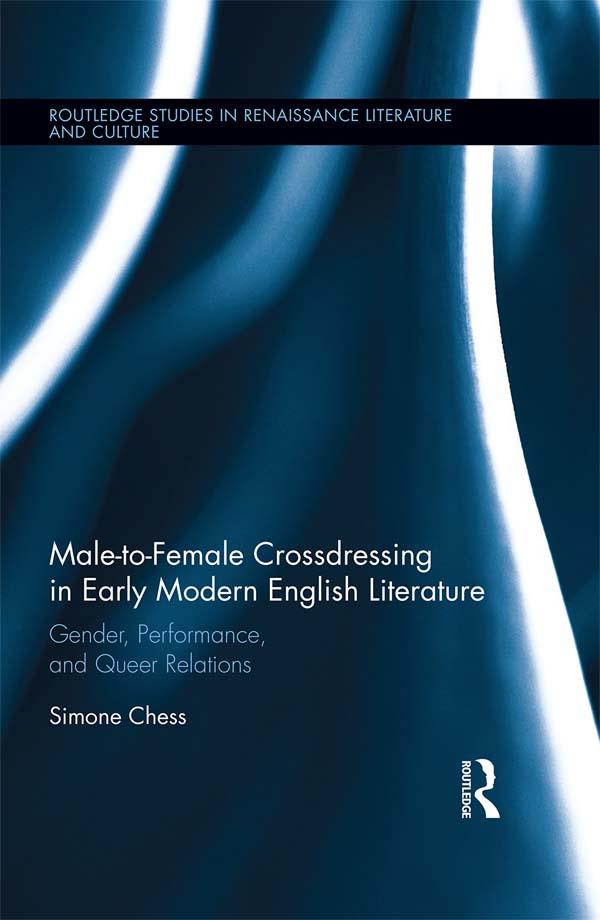
This volume examines and theorizes the oft-ignored phenomenon of male-to-female (MTF) crossdressing in early modern drama, prose, and poetry, inviting MTF crossdressing episodes to take a fuller place alongside instances of female-to-male crossdressing and boy actors’ crossdressing, which have long held the spotlight in early modern gender studies. The author argues that MTF crossdressing episodes are especially rich sources for socially-oriented readings of queer gender—that crossdressers’ genders are constructed and represented in relation to romantic partners, communities, and broader social structures like marriage, economy, and sexuality. Further, she argues that these relational representations show that the crossdresser and his/her allies often benefit financially, socially, and erotically from his/her queer gender presentation, a corrective to the dominant idea that queer gender has always been associated with shame, containment, and correction. By attending to these relational and beneficial representations of MTF crossdressers in early modern literature, the volume helps to make a larger space for queer, genderqueer, male-bodied and queer-feminine representations in our conversations about early modern gender and sexuality.
Betaal eenvoudig met kaart, Klarna, Apple Pay of Google Pay. Niet tevreden? Je hebt altijd 14 dagen bedenktijd. Lees meer in onze voorwaarden. Heb je vragen, mail ons dan via hello@memmo.org.
Memmo maakt studeren makkelijker – waar je ook bent ter wereld. Wij brengen je cursusboeken en slimme studietools samen op één plek: samenvattingen, quizzen, podcasts en flashcards. En Ted, je studievriend die antwoord geeft op alles wat je je afvraagt. Meer dan 50.000 studenten studeren hier al – gebouwd om je sneller te laten leren en minder stress te geven.