
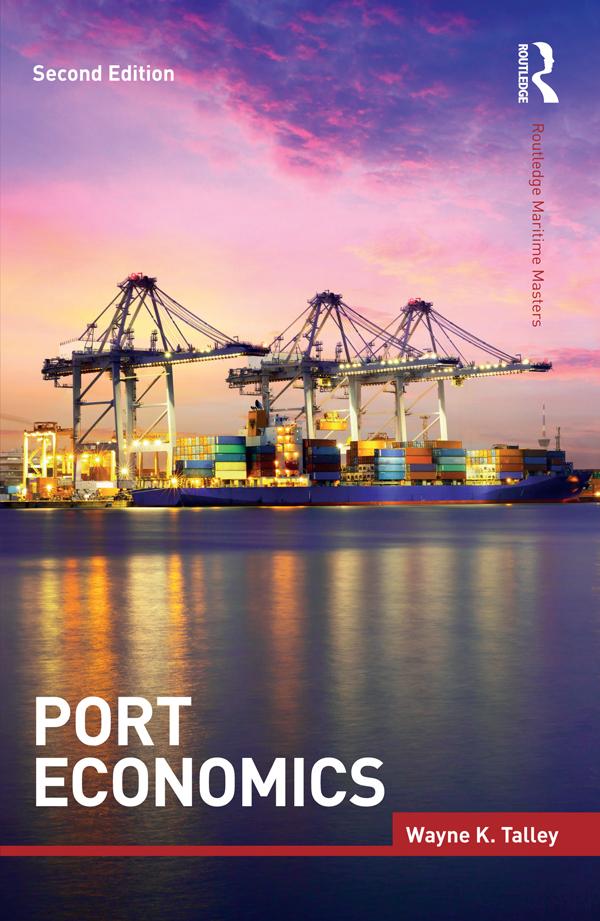
Port Economics is the study of the economic decisions (and their consequences) of the users and providers of port services. A port works as an "engine" for economic development. This book provides a detailed discussion of port freight service users, such as freight water and land carriers, that have their ships and vehicles serviced and their cargoes unloaded by ports, as well as passenger services such as ferry carriers which are serviced by ferry passenger ports.
This text continues to enhance our understanding of port economics by exploring the economic theories, supply and demand curves, and the actual and opportunity costs relating to the carriers, shippers and passengers who use ports.
This new edition has been updated throughout. This includes:
- An expanded discussion of container, break-bulk, dry-bulk, liquid-bulk and neo-bulk ports;
- An introduction of port service chains, hinterland transport chains, maritime transport chains and port multi-service congestion;
- A discussion of seaborne trade, dry ports, port centrality and connectivity and free trade zones.
This updated and comprehensive introduction to port economics will be of benefit to students and researchers in their study of port economics and management. It is also of great importance to professionals who manage and operate ports as well as freight and passenger carriers.
Betaal eenvoudig met kaart, Klarna, Apple Pay of Google Pay. Niet tevreden? Je hebt altijd 14 dagen bedenktijd. Lees meer in onze voorwaarden. Heb je vragen, mail ons dan via hello@memmo.org.
Memmo maakt studeren makkelijker – waar je ook bent ter wereld. Wij brengen je cursusboeken en slimme studietools samen op één plek: samenvattingen, quizzen, podcasts en flashcards. En Ted, je studievriend die antwoord geeft op alles wat je je afvraagt. Meer dan 50.000 studenten studeren hier al – gebouwd om je sneller te laten leren en minder stress te geven.