
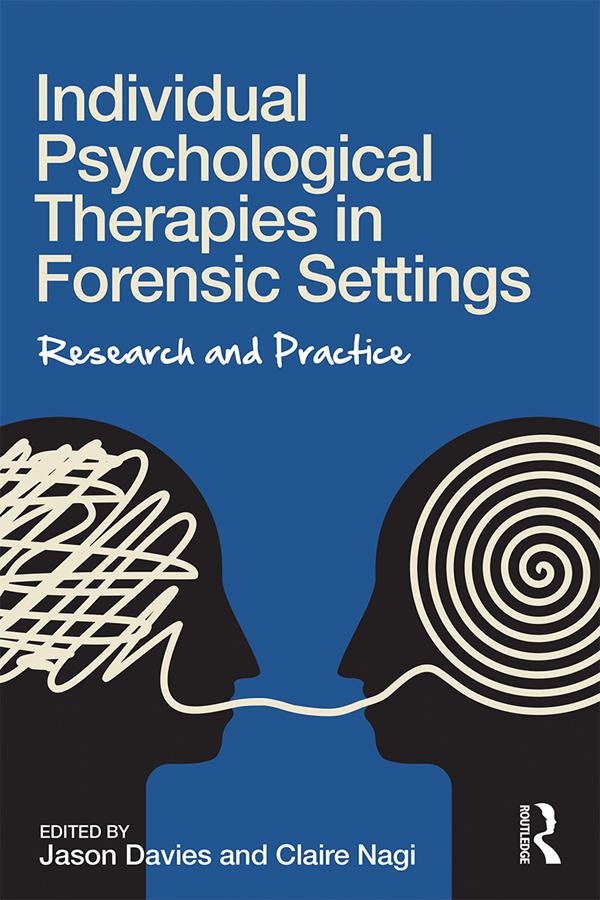
From the ‘nothing works’ maxim of the 1970s to evidence-based interventions to challenge recidivism and promote pro-social behavior, psychological therapy has played an important role in rehabilitation and risk reduction within forensic settings in recent years. And yet the typical group therapy model isn’t always the appropriate path to take.
In this important new book, the aims and effectiveness of individual therapies within forensic settings, both old and new, are assessed and discussed. Including contributions from authors based in the UK, North America, Europe, Australia and New Zealand, a broad range of therapies are covered, including Cognitive Behavioural Therapy, Mentalisation Based Therapy, Schema Therapy, Acceptance and Commitment Therapy and Compassion Focussed Therapy.
Each chapter provides:
- an assessment of the evidence base for effectiveness;
- the adaptations required in a forensic setting;
- whether the therapy is aimed at recidivism or psychological change;
- the client or patient characteristics it is aimed at;
- a case study of the therapy in action.
The final section of the book looks at ethical issues, the relationship between individual and group-based treatment, therapist supervision and deciding which therapies and therapists to select.
This book is essential reading for probation staff, psychologists, criminal justice and liaison workers and specialist treatment staff. It will also be a valuable resource for any student of forensic or clinical psychology.
Betaal eenvoudig met kaart, Klarna, Apple Pay of Google Pay. Niet tevreden? Je hebt altijd 14 dagen bedenktijd. Lees meer in onze voorwaarden. Heb je vragen, mail ons dan via hello@memmo.org.
Memmo maakt studeren makkelijker – waar je ook bent ter wereld. Wij brengen je cursusboeken en slimme studietools samen op één plek: samenvattingen, quizzen, podcasts en flashcards. En Ted, je studievriend die antwoord geeft op alles wat je je afvraagt. Meer dan 50.000 studenten studeren hier al – gebouwd om je sneller te laten leren en minder stress te geven.