
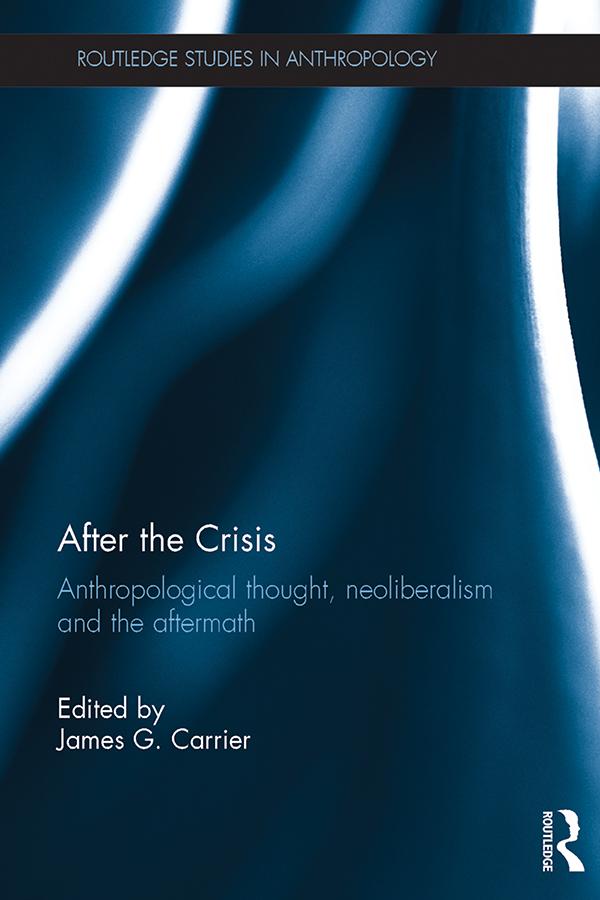
After the Crisis: Anthropological Thought, Neoliberalism and the Aftermath offers a thought-provoking examination of the state of contemporary anthropology, identifying key issues that have confronted the discipline in recent years and linking them to neoliberalism, and suggesting how we might do things differently in the future. The first part of the volume considers how anthropology has come to resemble, as a result of the rise of postmodern and poststructural approaches in the field, key elements of neoliberalism and neoclassical economics by rejecting the idea of system in favour of individuals. It also investigates the effect of the economic crisis on funding and support for higher education and addresses the sense that anthropology has ‘lost its way’, with uncertainty over the purpose and future of the discipline. The second part of the book explores how the discipline can overcome its difficulties and place itself on a firmer foundation, suggesting ways that we can productively combine the debates of the late twentieth century with a renewed sense that people live their lives not as individuals, but as enmeshed in webs of relationship and obligation.
Betaal eenvoudig met kaart, Klarna, Apple Pay of Google Pay. Niet tevreden? Je hebt altijd 14 dagen bedenktijd. Lees meer in onze voorwaarden. Heb je vragen, mail ons dan via hello@memmo.org.
Memmo maakt studeren makkelijker – waar je ook bent ter wereld. Wij brengen je cursusboeken en slimme studietools samen op één plek: samenvattingen, quizzen, podcasts en flashcards. En Ted, je studievriend die antwoord geeft op alles wat je je afvraagt. Meer dan 50.000 studenten studeren hier al – gebouwd om je sneller te laten leren en minder stress te geven.