
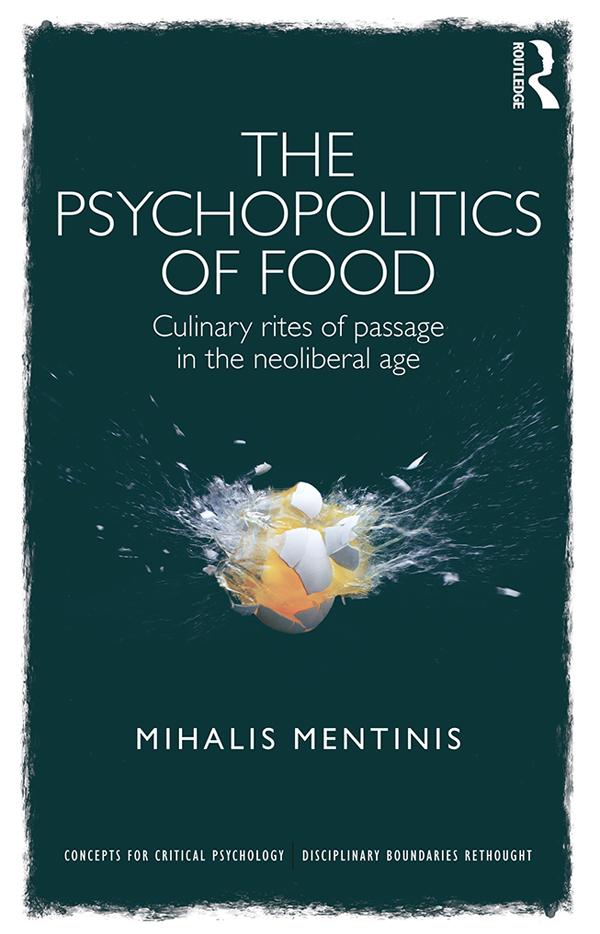
The Psychopolitics of Food probes into the contemporary ‘foodscape’, examining culinary practices and food habits and in particular the ways in which they conflate with neoliberal political economy. It suggests that generic alimentary and culinary practices constitute technologies of the self and the body and argues that the contemporary preoccupation with food takes the form of ‘rites of passage’ that express and mark the transition from a specific stage of neoliberal development to another vis-à-vis a re-configuration of the alimentary and sexual regimes.
Even though these rites of passage are taking place on the borders of cultural bi-polarities, their function, nevertheless, is precisely to define these borders as sites of a neoliberal transitional demand; that is, to produce a cultural bifurcation between ‘eating orders’ and ‘eating dis-orders’, by promoting and naturalising certain social logics while simultaneously rendering others as abject and anachronistic.
The book is a worthwhile read for researchers and advanced scholars in the areas of food studies, critical psychology, anthropology and sociology.
Betaal eenvoudig met kaart, Klarna, Apple Pay of Google Pay. Niet tevreden? Je hebt altijd 14 dagen bedenktijd. Lees meer in onze voorwaarden. Heb je vragen, mail ons dan via hello@memmo.org.
Memmo maakt studeren makkelijker – waar je ook bent ter wereld. Wij brengen je cursusboeken en slimme studietools samen op één plek: samenvattingen, quizzen, podcasts en flashcards. En Ted, je studievriend die antwoord geeft op alles wat je je afvraagt. Meer dan 50.000 studenten studeren hier al – gebouwd om je sneller te laten leren en minder stress te geven.