
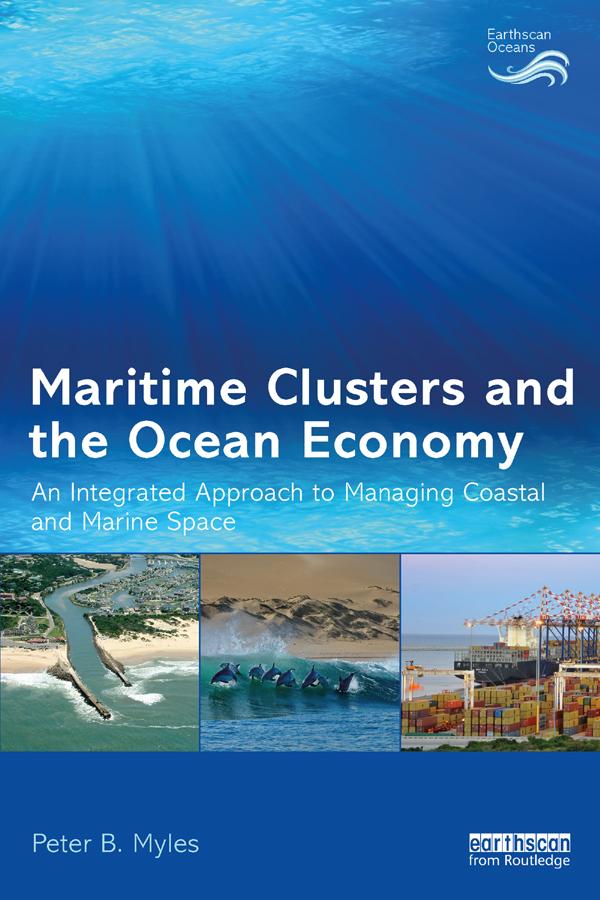
Over the last decade the concept of clustering has become a central idea for analyzing the competitiveness of nations, industries and firms. This book shows how the cluster concept can be usefully applied to the study of maritime activities.
Such activities, including shipping, shipbuilding and port and maritime services, are clearly geographically concentrated in a number of maritime clusters. However, as the author shows, these are having to compete with other uses of the coasts and oceans including capture fisheries, marine aquaculture, offshore energy and tourism. Sound governance and planning is therefore required to manage the competing claims for ocean space. The book shows how competing industries and other stakeholders can cooperate and benefit from an integrated approach to the development of maritime clusters.
The contribution of approaches such as integrated coastal zone management and innovations such as ocean business councils, as well as coordinated networks of maritime clusters are reviewed. Case studies are included from around the world, including detailed examples of the development of the Nelson Mandela Bay Maritime Cluster in South Africa and from Poland in the Baltic Sea.
Betaal eenvoudig met kaart, Klarna, Apple Pay of Google Pay. Niet tevreden? Je hebt altijd 14 dagen bedenktijd. Lees meer in onze voorwaarden. Heb je vragen, mail ons dan via hello@memmo.org.
Memmo maakt studeren makkelijker – waar je ook bent ter wereld. Wij brengen je cursusboeken en slimme studietools samen op één plek: samenvattingen, quizzen, podcasts en flashcards. En Ted, je studievriend die antwoord geeft op alles wat je je afvraagt. Meer dan 50.000 studenten studeren hier al – gebouwd om je sneller te laten leren en minder stress te geven.