
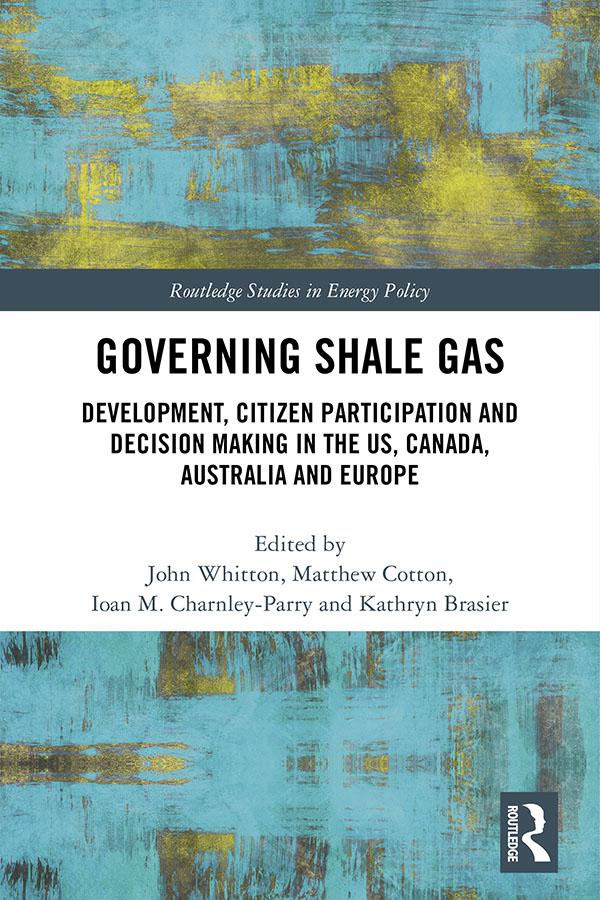
Shale energy development is an issue of global importance. The number of reserves globally, and their potential economic return, have increased dramatically in the past decade. Questions abound, however, about the appropriate governance systems to manage the risks of unconventional oil and gas development and the ability for citizens to engage and participate in decisions regarding these systems. Stakeholder participation is essential for the social and political legitimacy of energy extraction and production, what the industry calls a 'social license' to operate.
This book attempts to bring together critical themes inherent in the energy governance literature and illustrate them through cases in multiple countries, including the US, the UK, Canada, South Africa, Germany and Poland. These themes include how multiple actors and institutions – industry, governments and regulatory bodies at all scales, communities, opposition movements, and individual landowners – have roles in developing, contesting, monitoring, and enforcing practices and regulations within unconventional oil and gas development. Overall, the book proposes a systemic, participatory, community-led approach required to achieve a form of legitimacy that allows communities to derive social priorities by a process of community visioning.
This book will be of great relevance to scholars and policy-makers with an interest in shale gas development, and energy policy and governance.
Betaal eenvoudig met kaart, Klarna, Apple Pay of Google Pay. Niet tevreden? Je hebt altijd 14 dagen bedenktijd. Lees meer in onze voorwaarden. Heb je vragen, mail ons dan via hello@memmo.org.
Memmo maakt studeren makkelijker – waar je ook bent ter wereld. Wij brengen je cursusboeken en slimme studietools samen op één plek: samenvattingen, quizzen, podcasts en flashcards. En Ted, je studievriend die antwoord geeft op alles wat je je afvraagt. Meer dan 50.000 studenten studeren hier al – gebouwd om je sneller te laten leren en minder stress te geven.