
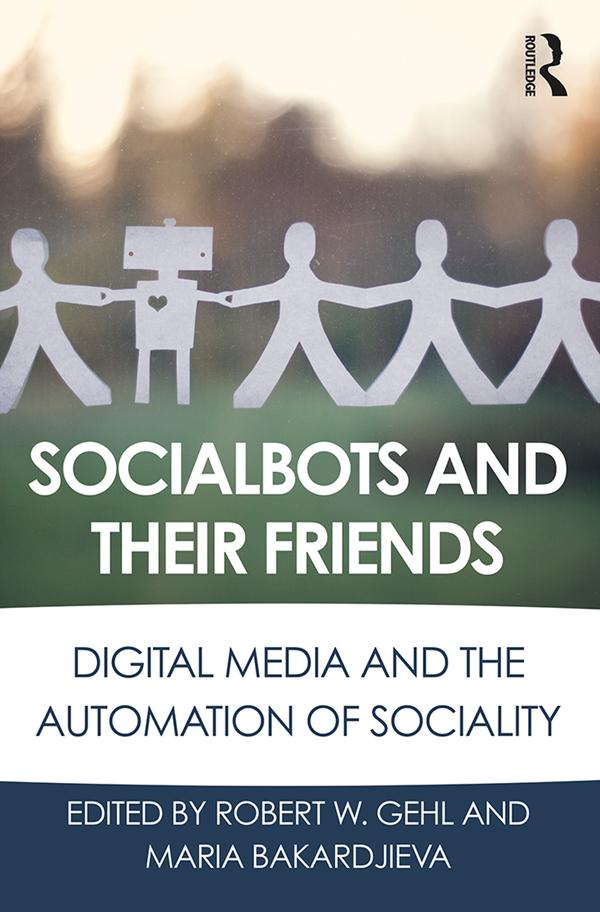
Many users of the Internet are aware of bots: automated programs that work behind the scenes to come up with search suggestions, check the weather, filter emails, or clean up Wikipedia entries. More recently, a new software robot has been making its presence felt in social media sites such as Facebook and Twitter – the socialbot. However, unlike other bots, socialbots are built to appear human. While a weatherbot will tell you if it's sunny and a spambot will incessantly peddle Viagra, socialbots will ask you questions, have conversations, like your posts, retweet you, and become your friend. All the while, if they're well-programmed, you won't know that you're tweeting and friending with a robot.
Who benefits from the use of software robots? Who loses? Does a bot deserve rights? Who pulls the strings of these bots? Who has the right to know what about them? What does it mean to be intelligent? What does it mean to be a friend? Socialbots and Their Friends: Digital Media and the Automation of Sociality is one of the first academic collections to critically consider the socialbot and tackle these pressing questions.
Betaal eenvoudig met kaart, Klarna, Apple Pay of Google Pay. Niet tevreden? Je hebt altijd 14 dagen bedenktijd. Lees meer in onze voorwaarden. Heb je vragen, mail ons dan via hello@memmo.org.
Memmo maakt studeren makkelijker – waar je ook bent ter wereld. Wij brengen je cursusboeken en slimme studietools samen op één plek: samenvattingen, quizzen, podcasts en flashcards. En Ted, je studievriend die antwoord geeft op alles wat je je afvraagt. Meer dan 50.000 studenten studeren hier al – gebouwd om je sneller te laten leren en minder stress te geven.