
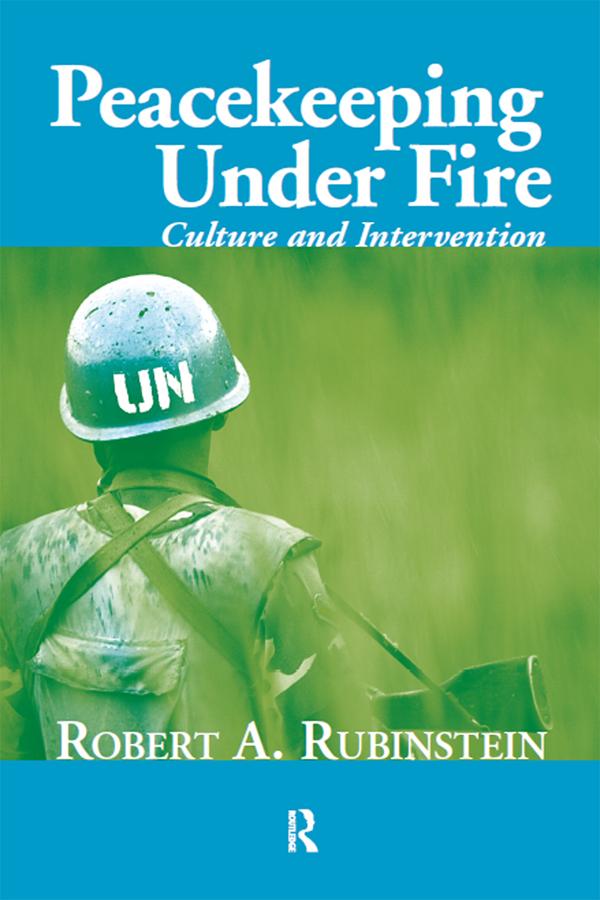
The international community increasingly responds to civil wars, humanitarian crises, and other intrastate conflicts through the instrument of UN peacekeeping. Nearly all of these interventions take place in non-Western areas and involve interactions among militaries and nongovernmental organizations from all around the globe. In this wide-ranging book, Rubinstein draws on decades of his own research on peacekeeping, and on other current and historical cases, to develop a broad understanding of the roles that culture plays in peacekeeping's success or failure. Peacekeeping under Fire shows that cultural considerations are key elements at all levels of peacekeeping operations. Culture influences what happens between peacekeepers and local populations, how military and nongovernmental organizations interact, and even how missions are planned and authorized. Peacekeeping under Fire analyzes how political symbolism and ritual are critical to peacekeeping and demonstrates how questions of power, identity, and political perception emerge from the cultural context of peacekeeping.
Betaal eenvoudig met kaart, Klarna, Apple Pay of Google Pay. Niet tevreden? Je hebt altijd 14 dagen bedenktijd. Lees meer in onze voorwaarden. Heb je vragen, mail ons dan via hello@memmo.org.
Memmo maakt studeren makkelijker – waar je ook bent ter wereld. Wij brengen je cursusboeken en slimme studietools samen op één plek: samenvattingen, quizzen, podcasts en flashcards. En Ted, je studievriend die antwoord geeft op alles wat je je afvraagt. Meer dan 50.000 studenten studeren hier al – gebouwd om je sneller te laten leren en minder stress te geven.
Misschien vind je dit ook leuk
Koop het boek0