
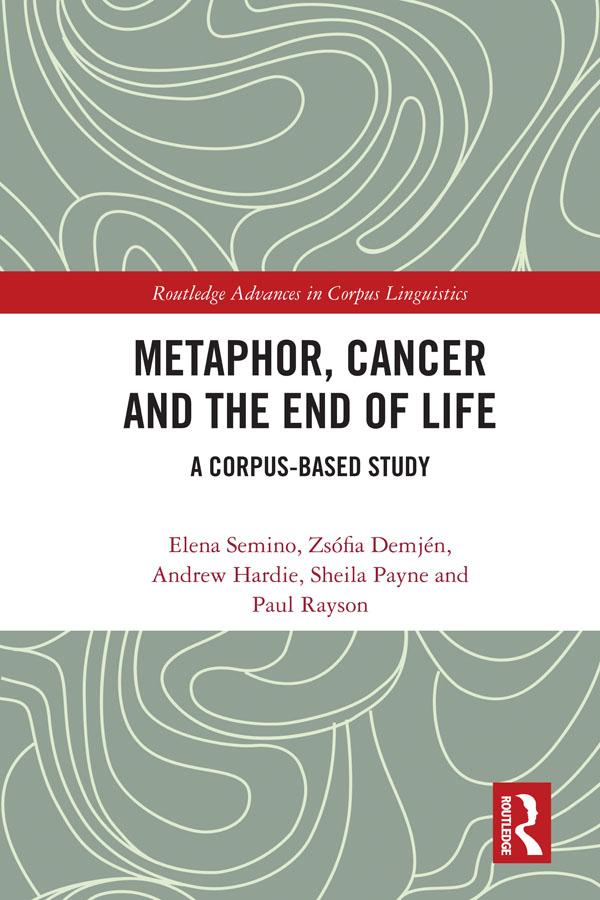
This book presents the methodology, findings and implications of a large-scale corpus-based study of the metaphors used to talk about cancer and the end of life (including care at the end of life) in the UK. It focuses on metaphor as a central linguistic and cognitive tool that is frequently used to talk and think about sensitive and subjective experiences, such as illness, emotions, death, and dying, and that can both help and hinder communication and well-being, depending on how it is used. The book centers on a combination of qualitative analyses and innovative corpus linguistic methods. This methodological assemblage was applied to the systematic study of the metaphors used in a 1.5-million-word corpus. The corpus consists of interviews with, and online forum posts written by, members of three stakeholder groups, namely: patients diagnosed with advanced cancer; unpaid carers looking after a relative with a diagnosis of advanced cancer; and healthcare professionals. The book presents a range of qualitative and quantitative findings that have implications for: metaphor theory and analysis; corpus linguistic and computational approaches to metaphor; and training and practice in cancer care and hospice, palliative and end-of-life care.
Betaal eenvoudig met kaart, Klarna, Apple Pay of Google Pay. Niet tevreden? Je hebt altijd 14 dagen bedenktijd. Lees meer in onze voorwaarden. Heb je vragen, mail ons dan via hello@memmo.org.
Memmo maakt studeren makkelijker – waar je ook bent ter wereld. Wij brengen je cursusboeken en slimme studietools samen op één plek: samenvattingen, quizzen, podcasts en flashcards. En Ted, je studievriend die antwoord geeft op alles wat je je afvraagt. Meer dan 50.000 studenten studeren hier al – gebouwd om je sneller te laten leren en minder stress te geven.