
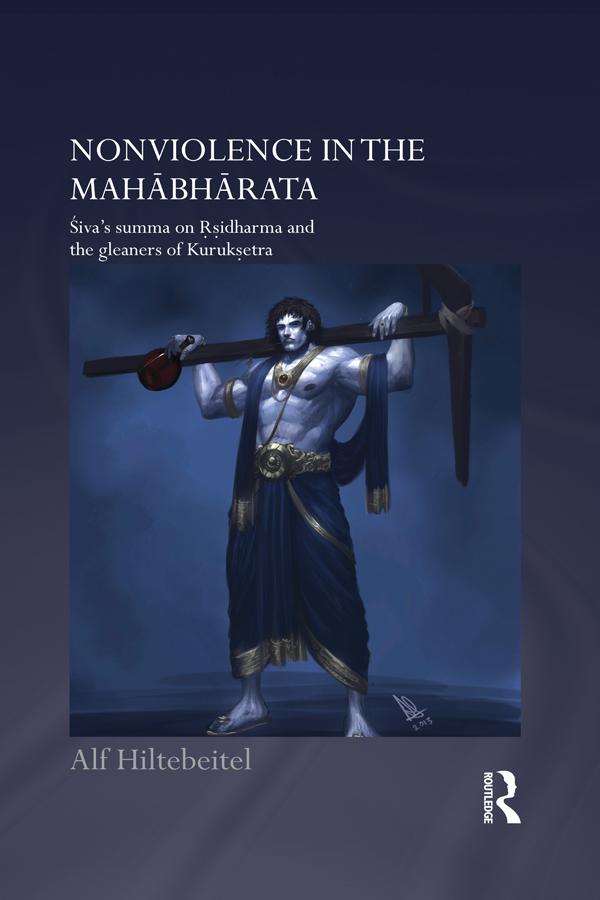
In Indian mythological texts like the Mahābhārata and Rāmāyaṇa, there are recurrent tales about gleaners. The practice of "gleaning" in India had more to do with the house-less forest life than with residential village or urban life or with gathering residual post-harvest grains from cultivated fields. Gleaning can be seen a metaphor for the Mahābhārata poets’ art: an art that could have included their manner of gleaning what they made the leftovers (what they found useful) from many preexistent texts into Vyāsa’s “entire thought”—including oral texts and possibly written ones, such as philosophical debates and stories.
This book explores the notion of non-violence in the epic Mahābhārata. In examining gleaning as an ecological and spiritual philosophy nurtured as much by hospitality codes as by eating practices, the author analyses the merits and limitations of the 9th century Kashmiri aesthetician Anandavardhana that the dominant aesthetic sentiment or rasa of the Mahābhārata is shanta (peace). Mahatma Gandhi's non-violent reading of the Mahabharata via the Bhagavad Gita are also studied.
This book by one of the leaders in Mahābhārata studies is of interest to scholars of South Asian Literary Studies, Religious Studies as well as Peace Studies, South Asian Anthropology and History.
Betaal eenvoudig met kaart, Klarna, Apple Pay of Google Pay. Niet tevreden? Je hebt altijd 14 dagen bedenktijd. Lees meer in onze voorwaarden. Heb je vragen, mail ons dan via hello@memmo.org.
Memmo maakt studeren makkelijker – waar je ook bent ter wereld. Wij brengen je cursusboeken en slimme studietools samen op één plek: samenvattingen, quizzen, podcasts en flashcards. En Ted, je studievriend die antwoord geeft op alles wat je je afvraagt. Meer dan 50.000 studenten studeren hier al – gebouwd om je sneller te laten leren en minder stress te geven.