
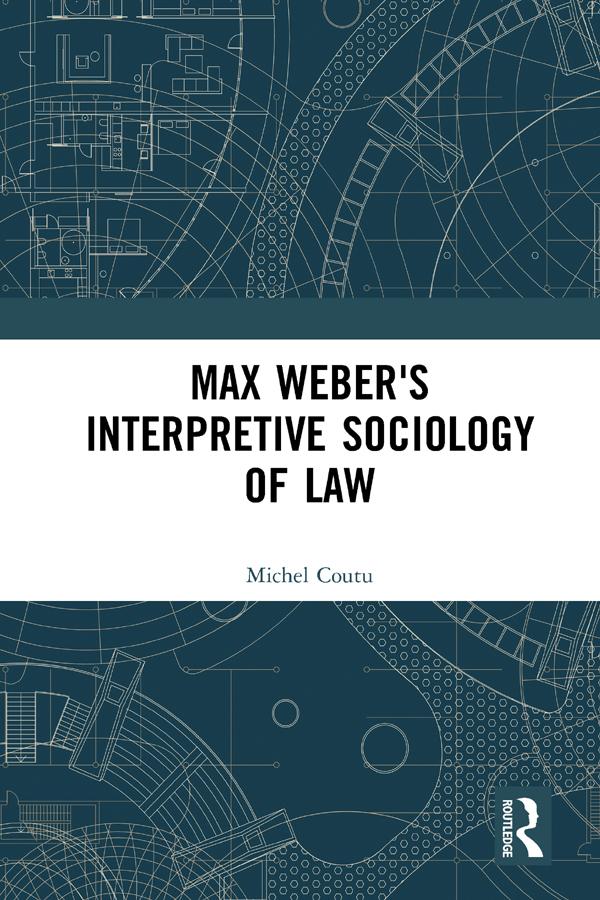
This book presents a clear and precise account of the structure and content of Max Weber's sociology of law: situating its methodological and epistemological specificity in relation to other approaches to the sociology of law; as well as offering a critical evaluation of Weber's usefulness for contemporary socio-legal research. The book is divided into three parts. The first part deals with the methodological foundations of Weber's sociology of law. The second analyses the central theme of this sociology, the rationalisation of law, from the perspective of its internal logical coherence, its empirical validity, and finally its legitimacy. The third part questions the present-day relevance of the Weberian sociology of law for socio-legal research, notably with regard to legal pluralism. Max Weber, it is demonstrated, is not merely a 'founding father' of the sociology of law; rather, his methodology, concepts, and empirical analyses remain highly useful to the further development of work in this area.
Betaal eenvoudig met kaart, Klarna, Apple Pay of Google Pay. Niet tevreden? Je hebt altijd 14 dagen bedenktijd. Lees meer in onze voorwaarden. Heb je vragen, mail ons dan via hello@memmo.org.
Memmo maakt studeren makkelijker – waar je ook bent ter wereld. Wij brengen je cursusboeken en slimme studietools samen op één plek: samenvattingen, quizzen, podcasts en flashcards. En Ted, je studievriend die antwoord geeft op alles wat je je afvraagt. Meer dan 50.000 studenten studeren hier al – gebouwd om je sneller te laten leren en minder stress te geven.