
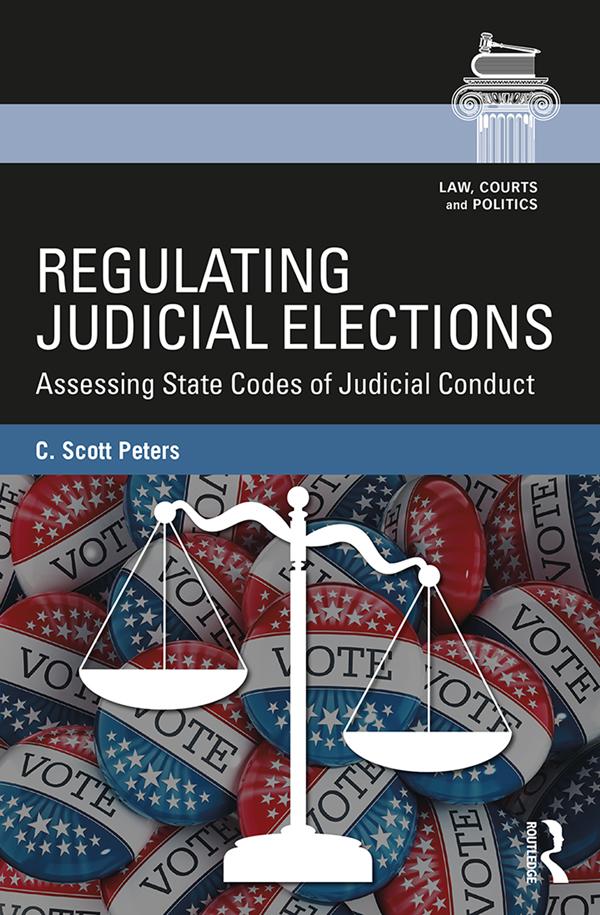
State judicial elections are governed by a unique set of rules that enforce longstanding norms of judicial independence by limiting how judicial candidates campaign. These rules have been a key part of recent debates over judicial elections and have been the subject of several U.S. Supreme Court cases.
Regulating Judicial Elections provides the first accounting of the efficacy and consequences of such rules. C. Scott Peters re-frames debates over judicial elections by shifting away from all-or-nothing claims about threats to judicial independence and focusing instead on the trade-offs inherent in our checks and balances system. In doing so, he is able to examine the costs and benefits of state ethical restrictions. Peters finds that while some parts of state codes of conduct achieve their desired goals, others may backfire and increase the politicization of judicial elections. Moreover, modest gains in the protection of independence come at the expense of the effectiveness of elections as accountability mechanisms. These empirical findings will inform ongoing normative debates about judicial elections.
Betaal eenvoudig met kaart, Klarna, Apple Pay of Google Pay. Niet tevreden? Je hebt altijd 14 dagen bedenktijd. Lees meer in onze voorwaarden. Heb je vragen, mail ons dan via hello@memmo.org.
Memmo maakt studeren makkelijker – waar je ook bent ter wereld. Wij brengen je cursusboeken en slimme studietools samen op één plek: samenvattingen, quizzen, podcasts en flashcards. En Ted, je studievriend die antwoord geeft op alles wat je je afvraagt. Meer dan 50.000 studenten studeren hier al – gebouwd om je sneller te laten leren en minder stress te geven.