
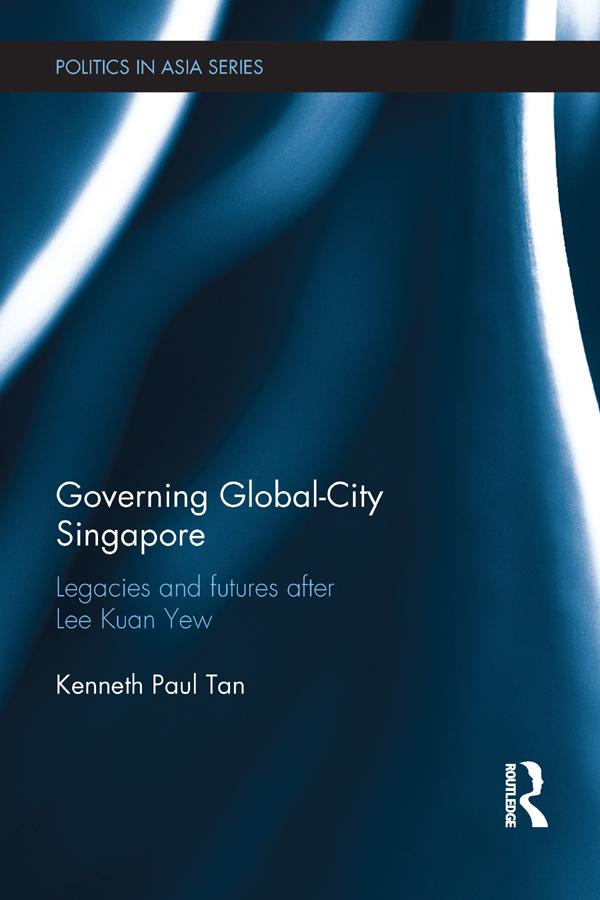
This book provides a detailed analysis of how governance in Singapore has evolved since independence to become what it is today, and what its prospects might be in a post-Lee Kuan Yew future. Firstly, it discusses the question of political leadership, electoral dominance and legislative monopoly in Singapore’s one-party dominant system and the system’s durability. Secondly, it tracks developments in Singapore’s public administration, critically analysing the formation and transformation of meritocracy and pragmatism, two key components of the state ideology. Thirdly, it discusses developments within civil society, focusing in particular on issues related to patriarchy and feminism, hetero-normativity and gay activism, immigration and migrant worker exploitation, and the contest over history and national narratives in academia, the media and the arts. Fourthly, it discusses the PAP government’s efforts to connect with the public, including its national public engagement exercises that can be interpreted as a subtler approach to social and political control. In increasingly complex conditions, the state struggles to maintain its hegemony while securing a pre-eminent position in the global economic order. Tan demonstrates how trends in these four areas converge in ways that signal plausible futures for a post-LKY Singapore.
Betaal eenvoudig met kaart, Klarna, Apple Pay of Google Pay. Niet tevreden? Je hebt altijd 14 dagen bedenktijd. Lees meer in onze voorwaarden. Heb je vragen, mail ons dan via hello@memmo.org.
Memmo maakt studeren makkelijker – waar je ook bent ter wereld. Wij brengen je cursusboeken en slimme studietools samen op één plek: samenvattingen, quizzen, podcasts en flashcards. En Ted, je studievriend die antwoord geeft op alles wat je je afvraagt. Meer dan 50.000 studenten studeren hier al – gebouwd om je sneller te laten leren en minder stress te geven.