
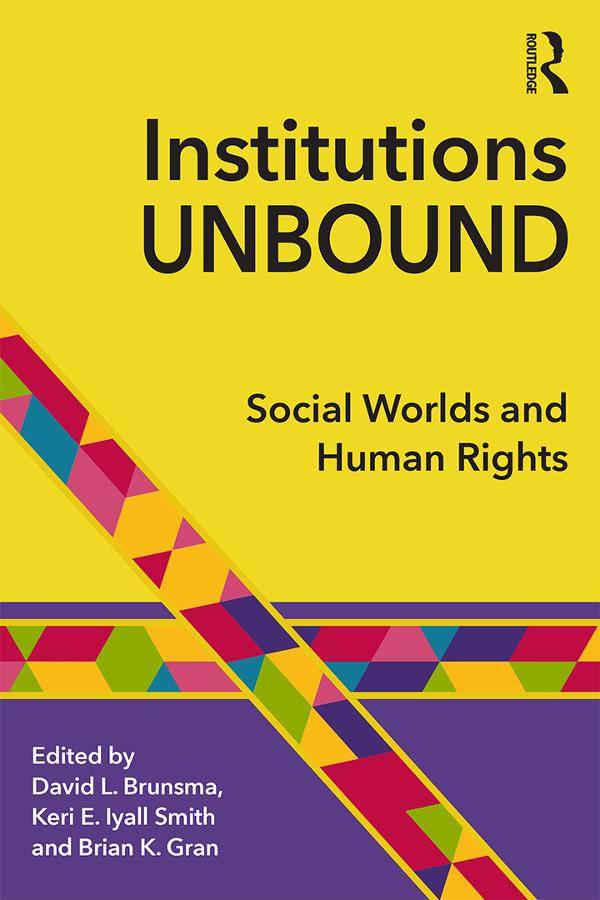
Institutions--like education, family, medicine, culture, and law--, are powerful social structures shaping how we live together. As members of society we daily express our adherence to norms and values of institutions as we consciously and unconsciously reject and challenge them. Our everyday experiences with institutions not only shape our connections with one another, they can reinforce our binding to the status quo as we struggle to produce social change. Institutions can help us do human rights. Institutions that bridge nation-states can offer resources, including norms, to advance human rights. These institutions can serve as touch stones to changing minds and confronting human rights violations. Institutions can also prevent us from doing human rights. We create institutions, but institutions can be difficult to change. Institutions can weaken, if not outright prevent, human rights establishment and implementation. To release human rights from their institutional bindings, sociologists must solve riddles of how institutions work and determine social life. This book is a step forward in identifying means by which we can loosen human rights from institutional constraints.
Betaal eenvoudig met kaart, Klarna, Apple Pay of Google Pay. Niet tevreden? Je hebt altijd 14 dagen bedenktijd. Lees meer in onze voorwaarden. Heb je vragen, mail ons dan via hello@memmo.org.
Memmo maakt studeren makkelijker – waar je ook bent ter wereld. Wij brengen je cursusboeken en slimme studietools samen op één plek: samenvattingen, quizzen, podcasts en flashcards. En Ted, je studievriend die antwoord geeft op alles wat je je afvraagt. Meer dan 50.000 studenten studeren hier al – gebouwd om je sneller te laten leren en minder stress te geven.