
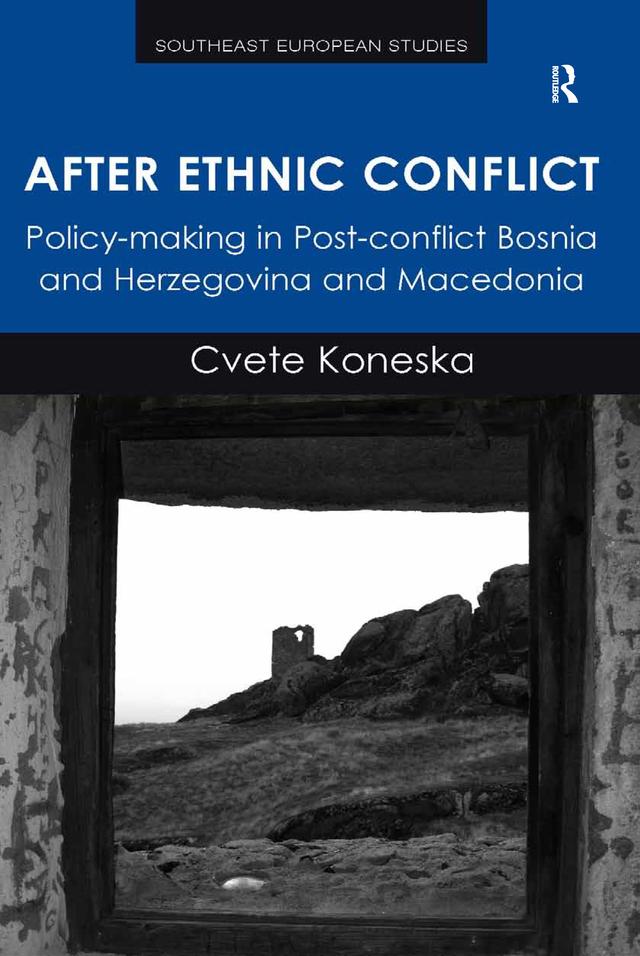
After Ethnic Conflict: Policy-making in Post-conflict Bosnia and Herzegovina and Macedonia investigates how sensitive policy issues can be resolved in the aftermath of war by investigating how political elites interact and make decisions in ethnically divided societies. Focussing on the interactions between political elites and attempts to reach agreement across ethnic lines in Bosnia and Macedonia the book examines the impact that institutional factors can have on political actors and the decisions they make. Examining domestic factors and external influence in politics, Cvete Koneska identifies four key drivers of post-conflict cooperation: cross-cutting identities, minority veto powers, territorial autonomy, and informal practices to explain inter-ethnic political accommodation. By looking beyond the immediate post-conflict landscape, created by foreign peace negotiators and aid missions, to the internal political process she shows the real reasons political actors cooperate and how competing ethnic tensions are reconciled following ethnic conflict. Delving deeper into specific policy areas to compare successful and unsuccessful attempts at ethnic accommodation this book explores the factors behind the different policy outcomes that sustain or undermine peace and ethnic cooperation in ethnically divided societies.
Betaal eenvoudig met kaart, Klarna, Apple Pay of Google Pay. Niet tevreden? Je hebt altijd 14 dagen bedenktijd. Lees meer in onze voorwaarden. Heb je vragen, mail ons dan via hello@memmo.org.
Memmo maakt studeren makkelijker – waar je ook bent ter wereld. Wij brengen je cursusboeken en slimme studietools samen op één plek: samenvattingen, quizzen, podcasts en flashcards. En Ted, je studievriend die antwoord geeft op alles wat je je afvraagt. Meer dan 50.000 studenten studeren hier al – gebouwd om je sneller te laten leren en minder stress te geven.
Misschien vind je dit ook leuk
Koop het boek0