
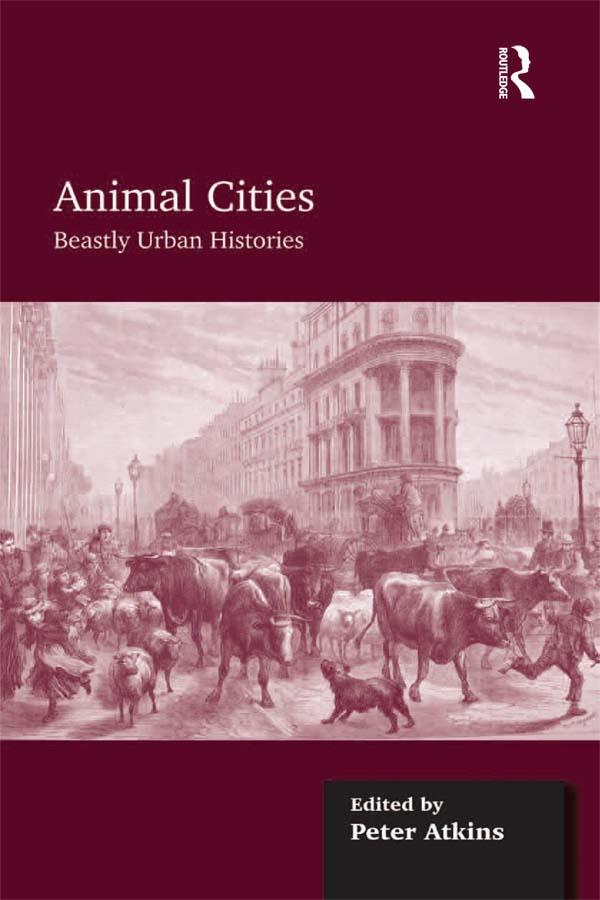
Animal Cities builds upon a recent surge of interest about animals in the urban context. Considering animals in urban settings is now a firmly established area of study and this book presents a number of valuable case studies that illustrate some of the perspectives that may be adopted. Having an ’urban history’ flavour, the book follows a fourfold agenda. First, the opening chapters look at working and productive animals that lived and died in nineteenth-century cities such as London, Edinburgh and Paris. The argument here is that their presence yields insights into evolving understandings of the category ’urban’ and what made a good city. Second, there is a consideration of nineteenth-century animal spectacles, which influenced contemporary interpretations of the urban experience. Third, the theme of contested animal spaces in the city is explored further with regard to backyard chickens in suburban Australia. Finally, there is discussion of the problem of the public companion animal and its role in changing attitudes to public space, illustrated with a chapter on dog-walking in Victorian and Edwardian London. Animal Cities makes a significant contribution to animal studies and is of interest to historical geographers, urban, cultural, social and economic historians and historians of policy and planning.
Betaal eenvoudig met kaart, Klarna, Apple Pay of Google Pay. Niet tevreden? Je hebt altijd 14 dagen bedenktijd. Lees meer in onze voorwaarden. Heb je vragen, mail ons dan via hello@memmo.org.
Memmo maakt studeren makkelijker – waar je ook bent ter wereld. Wij brengen je cursusboeken en slimme studietools samen op één plek: samenvattingen, quizzen, podcasts en flashcards. En Ted, je studievriend die antwoord geeft op alles wat je je afvraagt. Meer dan 50.000 studenten studeren hier al – gebouwd om je sneller te laten leren en minder stress te geven.
Misschien vind je dit ook leuk
Koop het boek0