
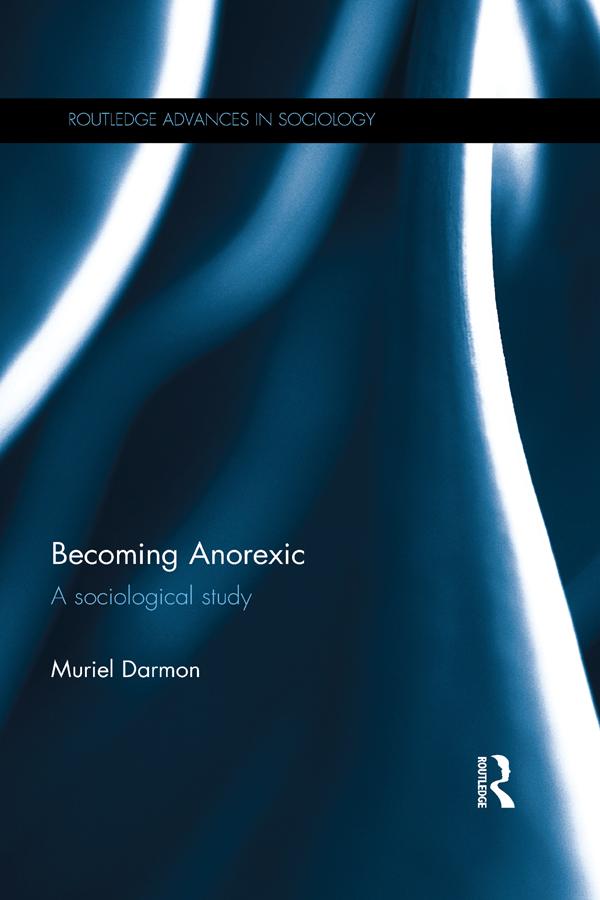
Anorexia tends to be studied within health disciplines, such as medicine, psychoanalysis or psychology. When the condition is discussed in relation to society more broadly, focus is commonly restricted to considerations about the demise of the traditional family meal or the all-pervading obsession with thinness and media representations of ‘size zero’ models. But what can sociology tell us about anorexia and how a person becomes anorexic? This book draws on empirical research – both interviews and observation – conducted in and outside medical settings with anorexic girls, medical staff, teachers and other teenagers of the same age. As such, it offers the first fully sociological treatment of the condition, taking the reader closer to the actual experiences of people living with anorexia. It retraces the behaviours, practices and processes that create what is patterned as an anorexic ‘career’ and reveals the cultural and social characteristics of the people who engage on this path taking them from a simple diet to hospitalization or recovery. Richly illustrated with qualitative research, Becoming Anorexic: A Sociological Approach demonstrates that anorexia can be viewed as a very particular work of self-transformation, which requires specific – and social – ‘dispositions’. As such, it will appeal to scholars of sociology and anthropology with an interest in health and illness, the body, social class and gender.
Betaal eenvoudig met kaart, Klarna, Apple Pay of Google Pay. Niet tevreden? Je hebt altijd 14 dagen bedenktijd. Lees meer in onze voorwaarden. Heb je vragen, mail ons dan via hello@memmo.org.
Memmo maakt studeren makkelijker – waar je ook bent ter wereld. Wij brengen je cursusboeken en slimme studietools samen op één plek: samenvattingen, quizzen, podcasts en flashcards. En Ted, je studievriend die antwoord geeft op alles wat je je afvraagt. Meer dan 50.000 studenten studeren hier al – gebouwd om je sneller te laten leren en minder stress te geven.