
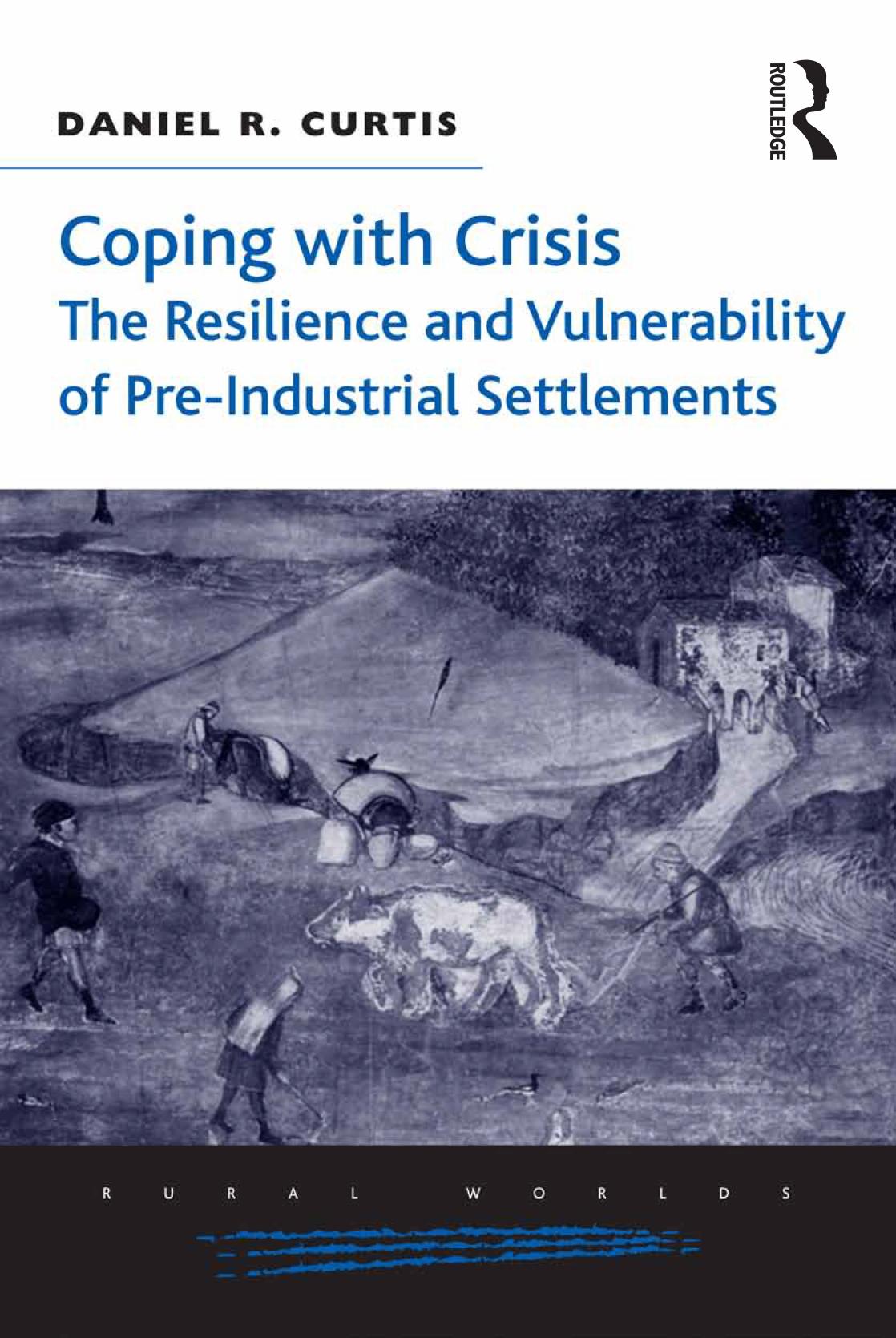
Why in the pre-industrial period were some settlements resilient and stable over the long term while other settlements were vulnerable to crisis? Indeed, what made certain human habitations more prone to decline or even total collapse, than others? All pre-industrial societies had to face certain challenges: exogenous environmental hazards such as earthquakes or plagues, economic or political hazards from ’outside’ such as warfare or expropriation of property, or hazards of their own-making such as soil erosion or subsistence crises. How then can we explain why some societies were able to overcome or negate these problems, while other societies proved susceptible to failure, as settlements contracted, stagnated, were abandoned, or even disappeared entirely? This book has been stimulated by the questions and hypotheses put forward by a recent ’disaster studies’ literature - in particular, by placing the intrinsic arrangement of societies at the forefront of the explanatory framework. Essentially it is suggested that the resilience or vulnerability of habitation has less to do with exogenous crises themselves, but on endogenous societal responses which dictate: (a) the extent of destruction caused by crises and the capacity for society to protect itself; and (b) the capacity to create a sufficient recovery. By empirically testing the explanatory framework on a number of societies between the Middle Ages and the nineteenth century in England, the Low Countries, and Italy, it is ultimately argued in this book that rather than the protective functions of the state or the market, or the implementation of technological innovation or capital investment, the most resilient human habitations in the pre-industrial period were those than displayed an equitable distribution of property and a well-balanced distribution of power between social interest groups. Equitable distributions of power and property were the underlying conditions in pre-industrial societies that all
Pagina's: 404
Categorie: Historia
e-ISBN: 9781317159636
Verzendgewicht: 1.2 kg
Verzending binnen: 1-2 dagen
Betaal eenvoudig met kaart, Klarna, Apple Pay of Google Pay. Niet tevreden? Je hebt altijd 14 dagen bedenktijd. Lees meer in onze voorwaarden. Heb je vragen, mail ons dan via hello@memmo.org.
Memmo maakt studeren makkelijker – waar je ook bent ter wereld. Wij brengen je cursusboeken en slimme studietools samen op één plek: samenvattingen, quizzen, podcasts en flashcards. En Ted, je studievriend die antwoord geeft op alles wat je je afvraagt. Meer dan 50.000 studenten studeren hier al – gebouwd om je sneller te laten leren en minder stress te geven.
Misschien vind je dit ook leuk
Koop het boek0