
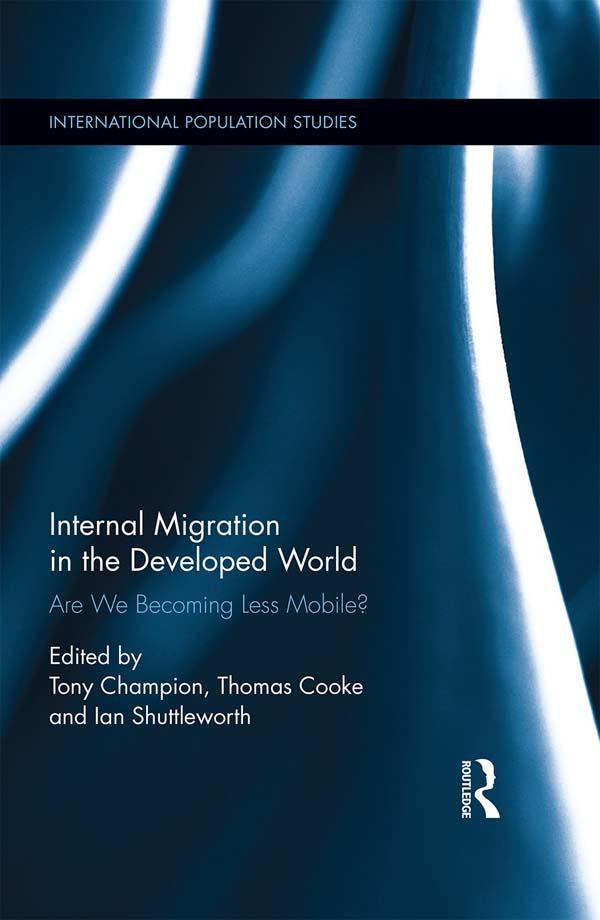
The frequency with which people move home has important implications for national economic performance and the well-being of individuals and families. Much contemporary social and migration theory posits that the world is becoming more mobile, leading to the recent ‘mobilities turn’ within the social sciences. Yet, there is mounting evidence to suggest that this may not be true of all types of mobility, nor apply equally to all geographical contexts. For example, it is now clear that internal migration rates have been falling in the USA since at least the 1980s. To what extent might this trend be true of other developed countries?
Drawing on detailed empirical literature, Internal Migration in the Developed World examines the long-term trends in internal migration in a variety of more advanced countries to explore the factors that underpin these changes. Using case studies of the USA, UK, Australia, Japan, Sweden, Germany and Italy, this pioneering book presents a critical assessment of the extent to which global structural forces, as opposed to national context, influence internal migration in the Global North.
Internal Migration in the Developed World fills the void in this neglected aspect of migration studies and will appeal to a wide disciplinary audience of researchers and students working in Geography, Migration Studies, Population Studies and Development Studies.
Betaal eenvoudig met kaart, Klarna, Apple Pay of Google Pay. Niet tevreden? Je hebt altijd 14 dagen bedenktijd. Lees meer in onze voorwaarden. Heb je vragen, mail ons dan via hello@memmo.org.
Memmo maakt studeren makkelijker – waar je ook bent ter wereld. Wij brengen je cursusboeken en slimme studietools samen op één plek: samenvattingen, quizzen, podcasts en flashcards. En Ted, je studievriend die antwoord geeft op alles wat je je afvraagt. Meer dan 50.000 studenten studeren hier al – gebouwd om je sneller te laten leren en minder stress te geven.