
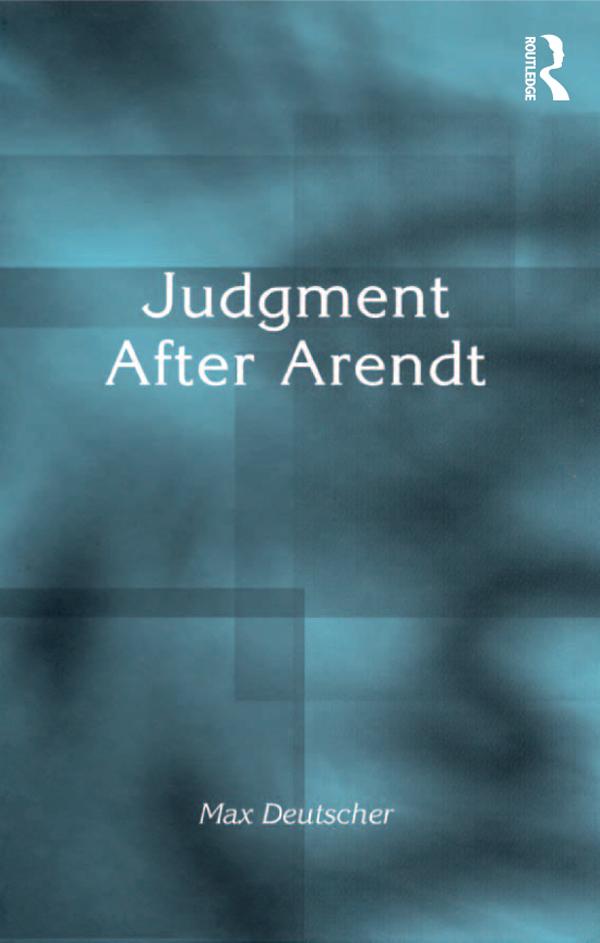
Judgment After Arendt is both the first full-length study of Hannah Arendt's The Life of the Mind and, at the same time, a philosophical work on the core concepts of thinking, willing and judging. Comprised of Thinking and Willing, her final and most sustained philosophical project, Arendt's work is framed by the 'thought-less' Adolf Eichmann whose 'banality' of mind in committing evil she observed at his trial in Jerusalem. Arendt's project, cut short by her death, was to have included Judgment. Without judgment, she argued, a life of thought and of will can still collude with evil. In analysing Arendt's work Deutscher develops this theme of judgment and shows how, by drawing upon literature, history, myth and idiom, Arendt contributes significantly to contemporary philosophy.
Betaal eenvoudig met kaart, Klarna, Apple Pay of Google Pay. Niet tevreden? Je hebt altijd 14 dagen bedenktijd. Lees meer in onze voorwaarden. Heb je vragen, mail ons dan via hello@memmo.org.
Memmo maakt studeren makkelijker – waar je ook bent ter wereld. Wij brengen je cursusboeken en slimme studietools samen op één plek: samenvattingen, quizzen, podcasts en flashcards. En Ted, je studievriend die antwoord geeft op alles wat je je afvraagt. Meer dan 50.000 studenten studeren hier al – gebouwd om je sneller te laten leren en minder stress te geven.
Misschien vind je dit ook leuk
Koop het boek0