
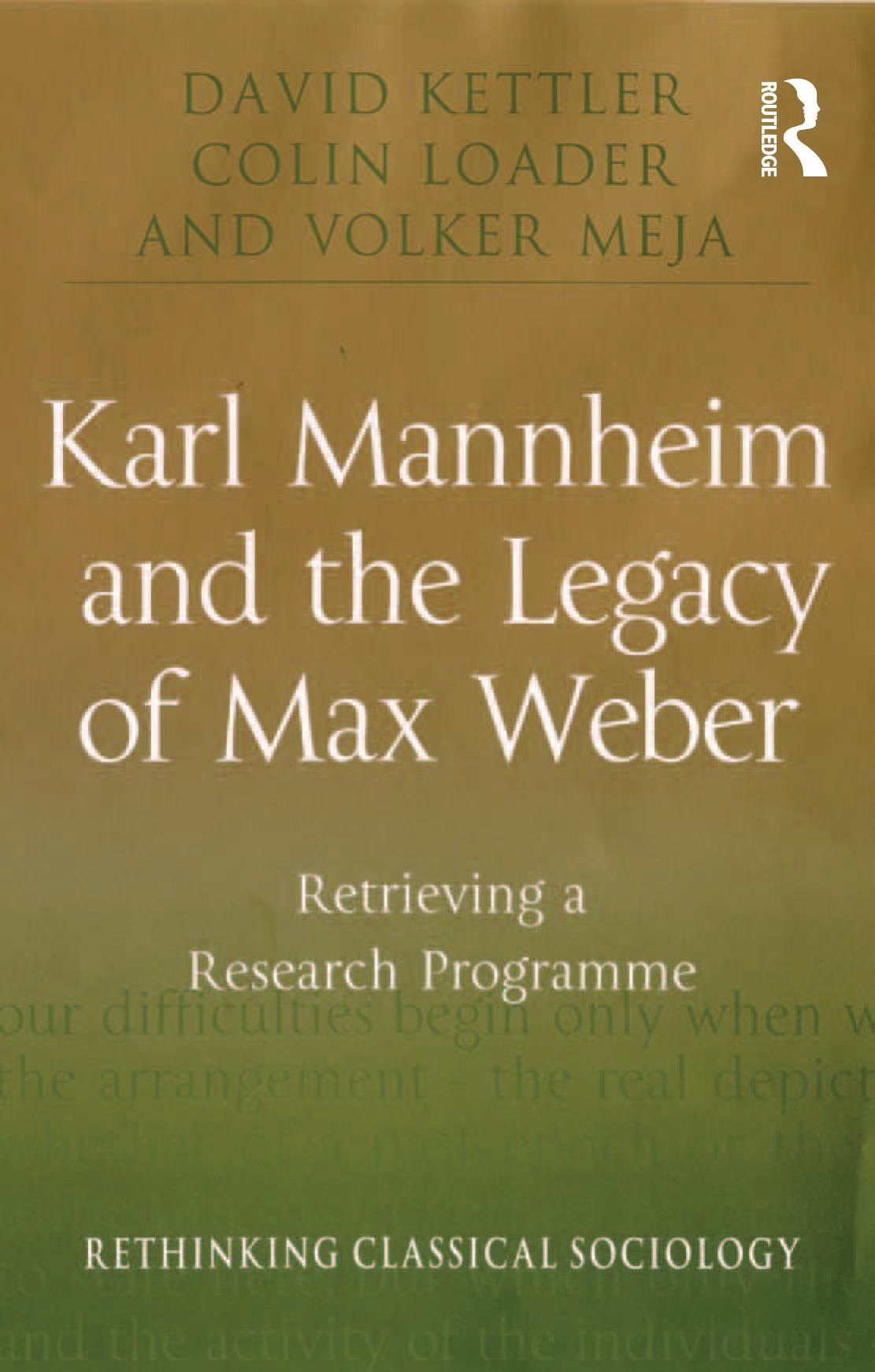
This book focuses on the important work of Karl Mannheim by demonstrating how his theoretical conception of a reflexive sociology took shape as a collaborative empirical research programme. The authors show how contemporary work along these lines can benefit from the insights of Mannheim and his students into both morphology and genealogy. It returns Mannheim's sociology of knowledge inquiries into the broader context of a wider project in historical and cultural sociology, whose promising development was disrupted and then partially obscured by the expulsion of Mannheim's intellectual generation. This inspired volume will appeal to sociologists concerned with the contemporary relevance of his work, and who are prepared for a fresh look at Weimar sociology and the legacy of Max Weber.
Betaal eenvoudig met kaart, Klarna, Apple Pay of Google Pay. Niet tevreden? Je hebt altijd 14 dagen bedenktijd. Lees meer in onze voorwaarden. Heb je vragen, mail ons dan via hello@memmo.org.
Memmo maakt studeren makkelijker – waar je ook bent ter wereld. Wij brengen je cursusboeken en slimme studietools samen op één plek: samenvattingen, quizzen, podcasts en flashcards. En Ted, je studievriend die antwoord geeft op alles wat je je afvraagt. Meer dan 50.000 studenten studeren hier al – gebouwd om je sneller te laten leren en minder stress te geven.
Misschien vind je dit ook leuk
Koop het boek0