
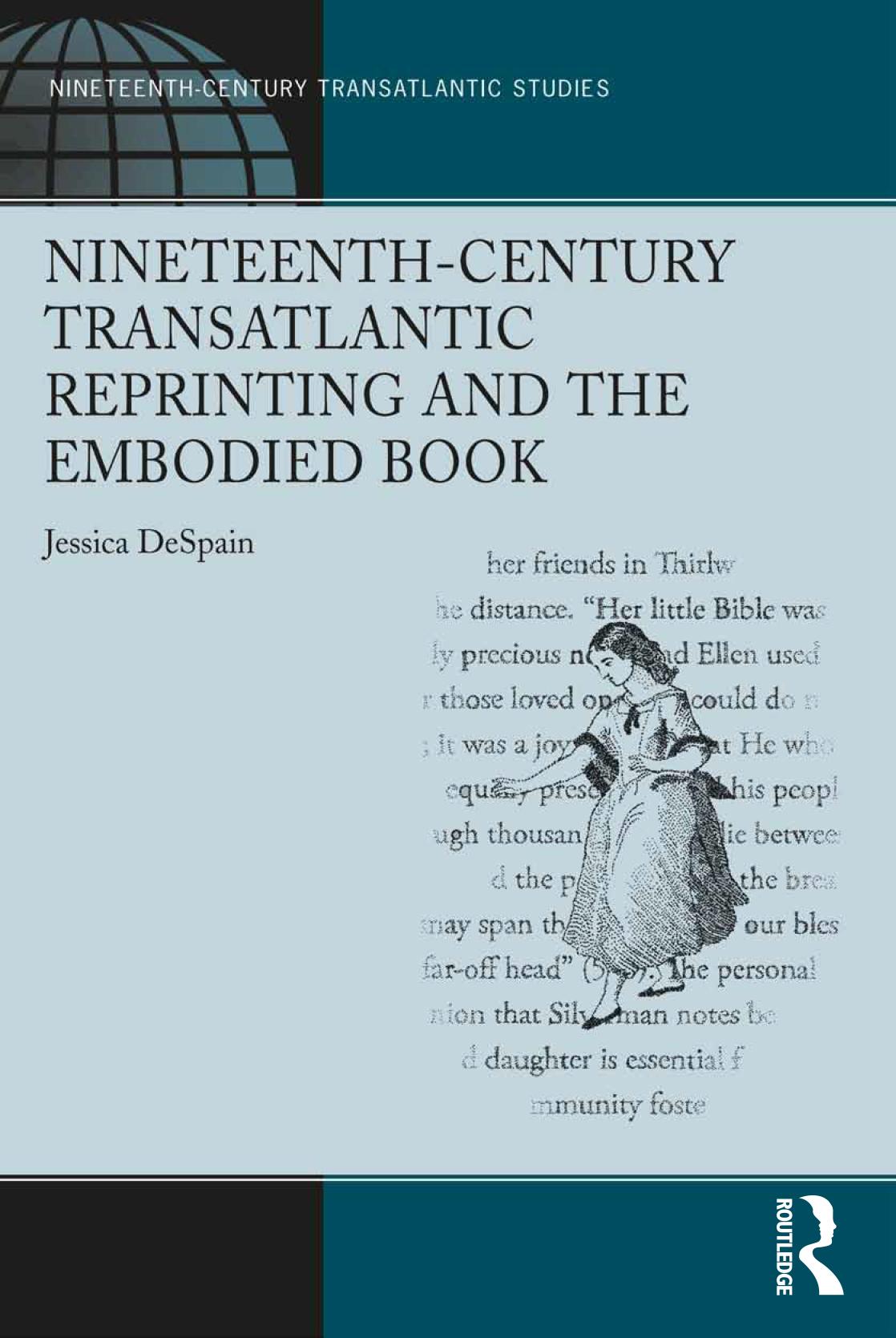
Until the Chace Act in 1891, no international copyright law existed between Britain and the United States, which meant publishers were free to edit text, excerpt whole passages, add new illustrations, and substantially redesign a book's appearance. In spite of this ongoing process of transatlantic transformation of texts, the metaphor of the book as a physical embodiment of its author persisted. Jessica DeSpain's study of this period of textual instability examines how the physical book acted as a major form of cultural exchange between Britain and the United States that called attention to volatile texts and the identities they manifested. Focusing on four influential works”Charles Dickens's American Notes for General Circulation, Susan Warner's The Wide, Wide World, Fanny Kemble's Journal of a Residence on a Georgian Plantation, and Walt Whitman's Democratic Vistas”DeSpain shows that for authors, readers, and publishers struggling with the unpredictability of the textual body, the physical book and the physical body became interchangeable metaphors of flux. At the same time, discourses of destabilized bodies inflected issues essential to transatlantic culture, including class, gender, religion, and slavery, while the practice of reprinting challenged the concepts of individual identity, personal property, and national identity.
Betaal eenvoudig met kaart, Klarna, Apple Pay of Google Pay. Niet tevreden? Je hebt altijd 14 dagen bedenktijd. Lees meer in onze voorwaarden. Heb je vragen, mail ons dan via hello@memmo.org.
Memmo maakt studeren makkelijker – waar je ook bent ter wereld. Wij brengen je cursusboeken en slimme studietools samen op één plek: samenvattingen, quizzen, podcasts en flashcards. En Ted, je studievriend die antwoord geeft op alles wat je je afvraagt. Meer dan 50.000 studenten studeren hier al – gebouwd om je sneller te laten leren en minder stress te geven.
Misschien vind je dit ook leuk
Koop het boek0