
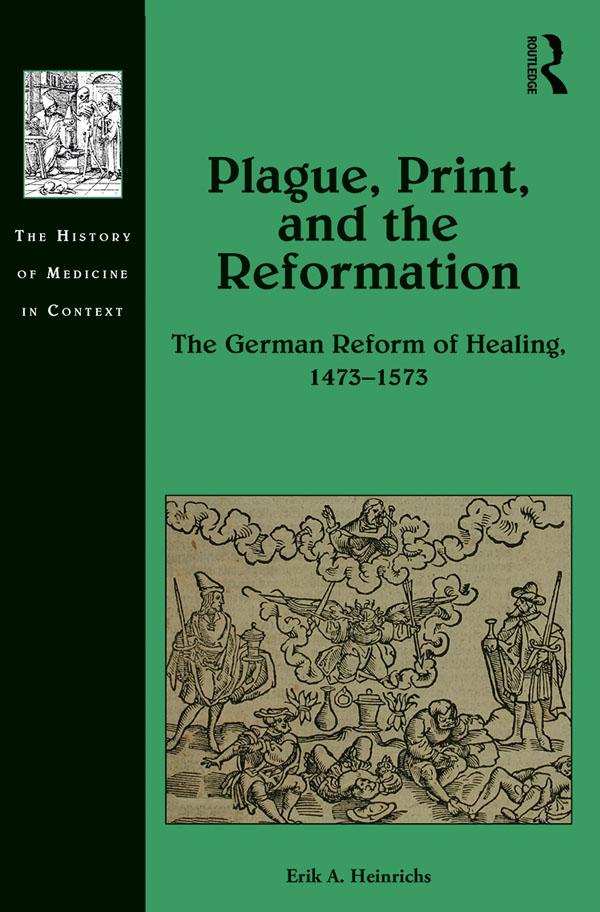
This book surveys a neglected set of sources, German plague prints and treatises published between 1473 and 1573, in order to explore the intertwined histories of plague, print, medicine and religion during the Reformation era. It argues that a particularly German reform of healing flourished in printed texts during the Renaissance and Reformation as physicians and clerics devised innovative responses to the era’s persistent epidemics. These reforms are "German" since they reflect the innovative trends that originated in or were particularly strong within German-speaking lands, including the rapid growth of vernacular print, Protestantism, and new interest in alchemy and the native plants of Northern Europe that were unknown to the ancients. Their reforms are also "German" in the sense that they unfolded mainly in vernacular print, which encouraged physicians to produce local knowledge, grounded in personal experience and local observations as much as universal theories. This book contributes to the history of medicine and science by tracing the growth of more empirical forms of medical knowledge. It also contributes to the history of the Renaissance and Reformation by uncovering the innovative contributions of various forgotten physicians. This book presents the broadest study of German plague treatises in any language.
Betaal eenvoudig met kaart, Klarna, Apple Pay of Google Pay. Niet tevreden? Je hebt altijd 14 dagen bedenktijd. Lees meer in onze voorwaarden. Heb je vragen, mail ons dan via hello@memmo.org.
Memmo maakt studeren makkelijker – waar je ook bent ter wereld. Wij brengen je cursusboeken en slimme studietools samen op één plek: samenvattingen, quizzen, podcasts en flashcards. En Ted, je studievriend die antwoord geeft op alles wat je je afvraagt. Meer dan 50.000 studenten studeren hier al – gebouwd om je sneller te laten leren en minder stress te geven.