
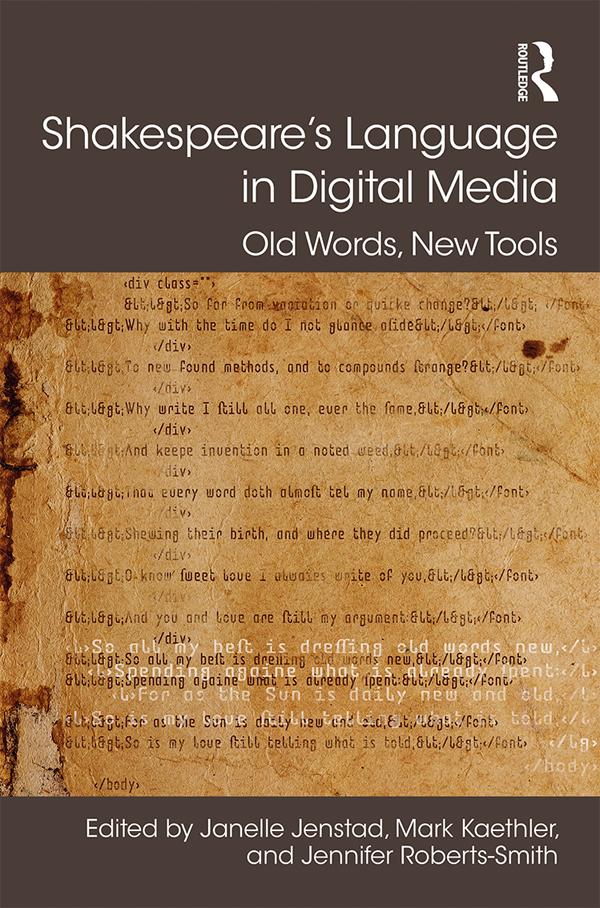
The authors of this book ask how digital research tools are changing the ways in which practicing editors historicize Shakespeare's language. Scholars now encounter, interpret, and disseminate Shakespeare's language through an increasing variety of digital resources, including online editions such as the Internet Shakespeare Editions (ISE), searchable lexical corpora such as the Early English Books Online-Text Creation Partnership (EEBO-TCP) or the Lexicons of Early Modern English (LEME) collections, high-quality digital facsimiles such as the Folger Shakespeare Library's Digital Image Collection, text visualization tools such as Voyant, apps for reading and editing on mobile devices, and more.
What new insights do these tools offer about the ways Shakespeare's words made meaning in their own time? What kinds of historical or historicizing arguments can editions make about Shakespeare's language? A growing body of work in the digital humanities allows textual critics to explore new approaches to editing in digital environments, and enables language historians to ask and answer new questions about Shakespeare's words. The authors in this unique book explicitly bring together the two fields of textual criticism and language history in an exploration of the ways in which new tools are expanding our understanding of Early Modern English.
Betaal eenvoudig met kaart, Klarna, Apple Pay of Google Pay. Niet tevreden? Je hebt altijd 14 dagen bedenktijd. Lees meer in onze voorwaarden. Heb je vragen, mail ons dan via hello@memmo.org.
Memmo maakt studeren makkelijker – waar je ook bent ter wereld. Wij brengen je cursusboeken en slimme studietools samen op één plek: samenvattingen, quizzen, podcasts en flashcards. En Ted, je studievriend die antwoord geeft op alles wat je je afvraagt. Meer dan 50.000 studenten studeren hier al – gebouwd om je sneller te laten leren en minder stress te geven.