
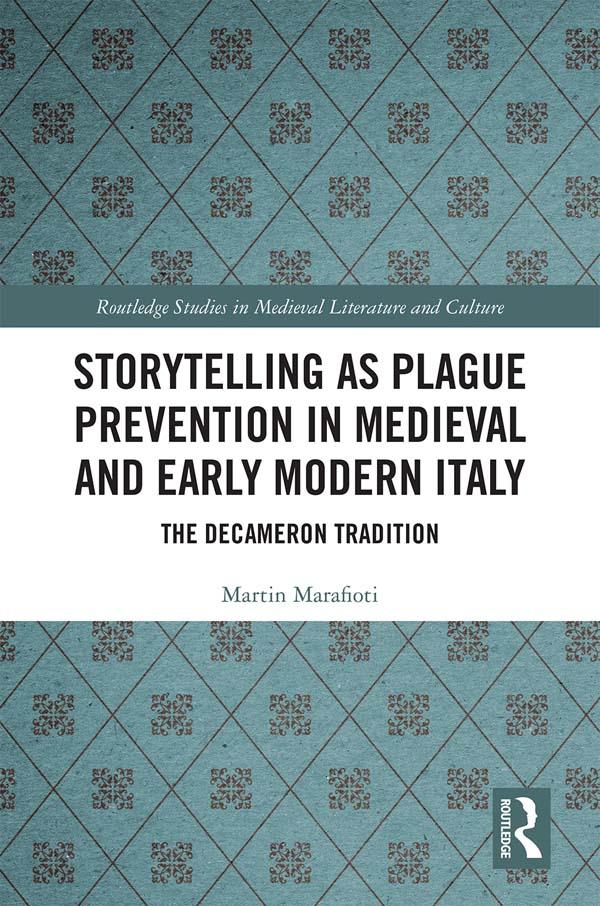
Through close readings of five Italian collections of novellas written over a 500-year period, Martin Marafioti explores the literary tradition of storytelling, and particularly its efficacy as a healing tool following traumatic visitations from the plague. In this study, Giovanni Boccaccio's Decameron provides the framework for later authors. Although Boccaccio was not the first writer to deal with pestilence or epidemics in a literary work, he was the first to unite the topos of a life-threatening context with a public health disaster like the Black Death, and certainly the first author to propose storytelling as a means of prophylaxis in times of plague. Marafioti goes on to analyze Franco Sacchetti's Trecento Novelle, Giovanni Sercambi's Novelliere, Celio Malespini's Duecento Novelle, and Francesco Argelati's Decamerone, following in its longue-durée the ups and down, structurally and thematically, of the realistic novella as a genre.
Pagina's: 154
Categorie: Litteraturvetenskap & Teori
e-ISBN: 9781317049685
Verzendgewicht: 1.2 kg
Verzending binnen: 1-2 dagen
Betaal eenvoudig met kaart, Klarna, Apple Pay of Google Pay. Niet tevreden? Je hebt altijd 14 dagen bedenktijd. Lees meer in onze voorwaarden. Heb je vragen, mail ons dan via hello@memmo.org.
Memmo maakt studeren makkelijker – waar je ook bent ter wereld. Wij brengen je cursusboeken en slimme studietools samen op één plek: samenvattingen, quizzen, podcasts en flashcards. En Ted, je studievriend die antwoord geeft op alles wat je je afvraagt. Meer dan 50.000 studenten studeren hier al – gebouwd om je sneller te laten leren en minder stress te geven.
Misschien vind je dit ook leuk
Koop het boek0