
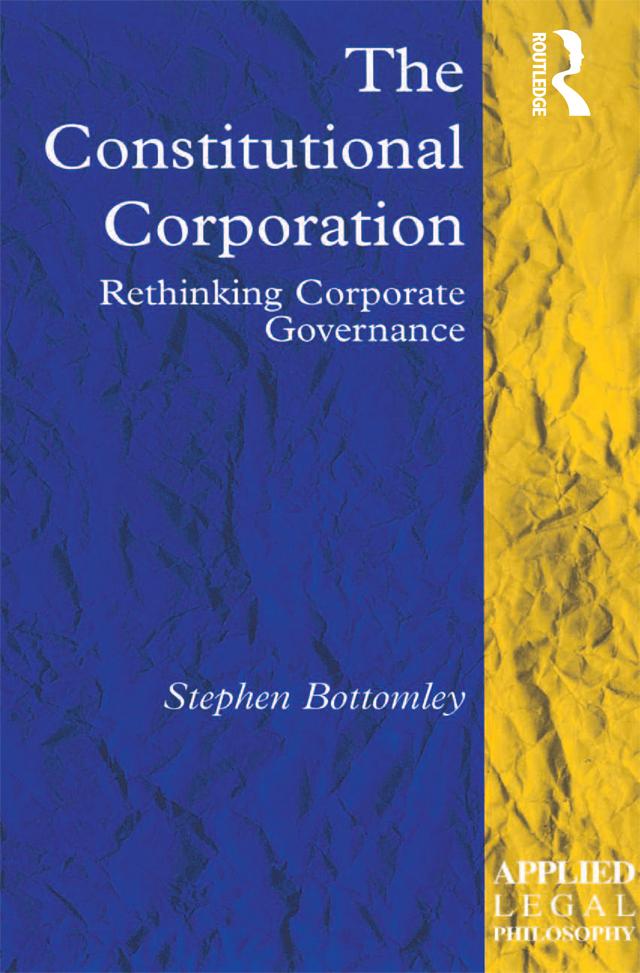
Corporate laws are based on the idea that the interests of shareholders should be the primary concern of company directors. However, some argue that the proper role for shareholders is to sit back and let the corporation's managers do their job, or that the pursuit of shareholders' interests detracts from the concerns of employees or victims of corporate wrongdoing or other stakeholders. Stephen Bottomley argues that instead of consigning shareholders to this passive role, they should be given opportunities to be active members of corporations. Corporations are constitutional arrangements rather than mere contractual agreements. They are decision-making organizations in which questions of process and structure are important. Thus, instead of using economic criteria such as efficiency as the sole measure for deciding what constitutes 'good' corporate governance, this book examines whether ideas of accountability, deliberation and contestability provide a valuable framework for assessing corporate structures and process and for encouraging greater shareholder participation.
Betaal eenvoudig met kaart, Klarna, Apple Pay of Google Pay. Niet tevreden? Je hebt altijd 14 dagen bedenktijd. Lees meer in onze voorwaarden. Heb je vragen, mail ons dan via hello@memmo.org.
Memmo maakt studeren makkelijker – waar je ook bent ter wereld. Wij brengen je cursusboeken en slimme studietools samen op één plek: samenvattingen, quizzen, podcasts en flashcards. En Ted, je studievriend die antwoord geeft op alles wat je je afvraagt. Meer dan 50.000 studenten studeren hier al – gebouwd om je sneller te laten leren en minder stress te geven.
Misschien vind je dit ook leuk
Koop het boek0