
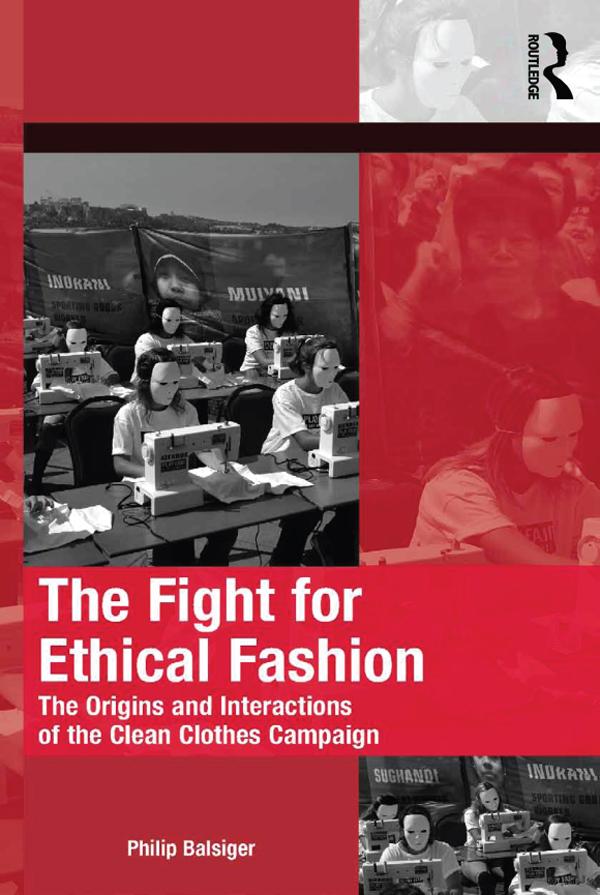
From consumer boycotts and buycotts to social movement campaigns, examples of individual and collective actors forging political struggles on markets are manifold. The clothing market has been a privileged site for such contention, with global clothing brands and retailers being targets of consumer mobilization for the past 20 years. Labels and product lines now attest for the ethical quality of clothes, which has, in turn, given rise to ethical fashion. The Fight for Ethical Fashion unveils the actors and processes that have driven this market transformation through a detailed study of the Europe-wide coordinated campaign on workers’ rights in the global textile industry - the Clean Clothes Campaign. Drawing on insights from qualitative fieldwork using a wide range of empirical sources, Philip Balsiger traces the emergence of this campaign back to the rise of ’consumer campaigns’ and shows how tactics were adapted to market contexts in order to have retailers adopt and monitor codes of conduct. By comparing the interactions between campaigners and their corporate targets in Switzerland and France (two countries with a very different history of consumer mobilization for political issues), this ground-breaking book also reveals how one campaign can provoke contrasting reactions and forms of market change.
Betaal eenvoudig met kaart, Klarna, Apple Pay of Google Pay. Niet tevreden? Je hebt altijd 14 dagen bedenktijd. Lees meer in onze voorwaarden. Heb je vragen, mail ons dan via hello@memmo.org.
Memmo maakt studeren makkelijker – waar je ook bent ter wereld. Wij brengen je cursusboeken en slimme studietools samen op één plek: samenvattingen, quizzen, podcasts en flashcards. En Ted, je studievriend die antwoord geeft op alles wat je je afvraagt. Meer dan 50.000 studenten studeren hier al – gebouwd om je sneller te laten leren en minder stress te geven.
Misschien vind je dit ook leuk
Koop het boek0