
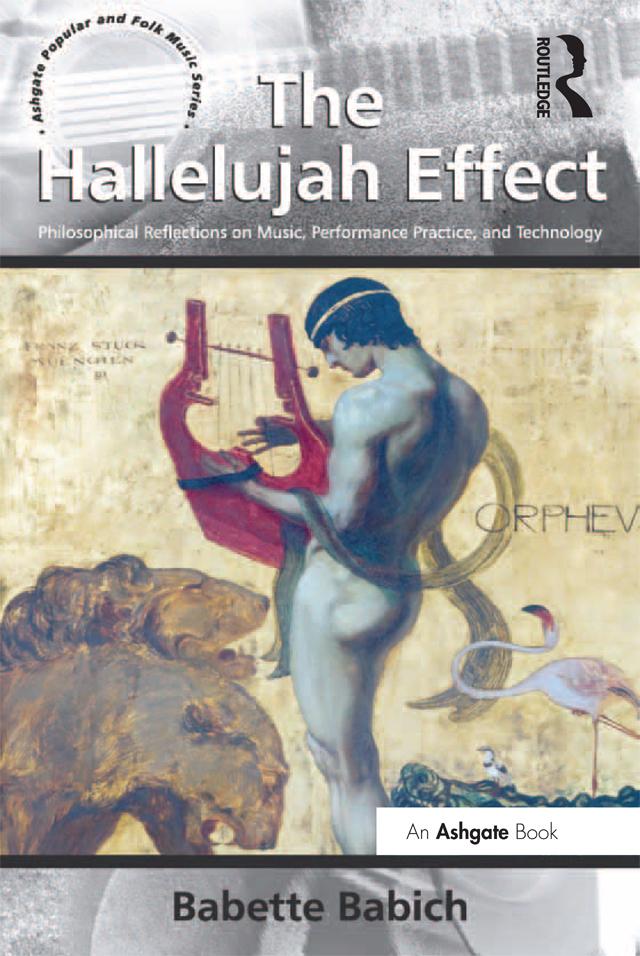
This book studies the working efficacy of Leonard Cohen's song Hallelujah in the context of today's network culture. Especially as recorded on YouTube, k.d. lang's interpretation(s) of Cohen's Hallelujah, embody acoustically and visually/viscerally, what Nietzsche named the 'spirit of music'. Today, the working of music is magnified and transformed by recording dynamics and mediated via Facebook exchanges, blog postings and video sites. Given the sexual/religious core of Cohen's Hallelujah, this study poses a phenomenological reading of the objectification of both men and women, raising the question of desire, including gender issues and both homosexual and heterosexual desire. A review of critical thinking about musical performance as 'currency' and consumed commodity takes up Adorno's reading of Benjamin's analysis of the work of art in the age of mechanical reproduction as applied to music/radio/sound and the persistent role of 'recording consciousness'. Ultimately, the question of what Nietzsche called the becoming-human-of-dissonance is explored in terms of both ancient tragedy and Beethoven's striking deployment of dissonance as Nietzsche analyses both as playing with suffering, discontent, and pain itself, a playing for the sake not of language or sense but musically, as joy.
Betaal eenvoudig met kaart, Klarna, Apple Pay of Google Pay. Niet tevreden? Je hebt altijd 14 dagen bedenktijd. Lees meer in onze voorwaarden. Heb je vragen, mail ons dan via hello@memmo.org.
Memmo maakt studeren makkelijker – waar je ook bent ter wereld. Wij brengen je cursusboeken en slimme studietools samen op één plek: samenvattingen, quizzen, podcasts en flashcards. En Ted, je studievriend die antwoord geeft op alles wat je je afvraagt. Meer dan 50.000 studenten studeren hier al – gebouwd om je sneller te laten leren en minder stress te geven.
Misschien vind je dit ook leuk
Koop het boek0