
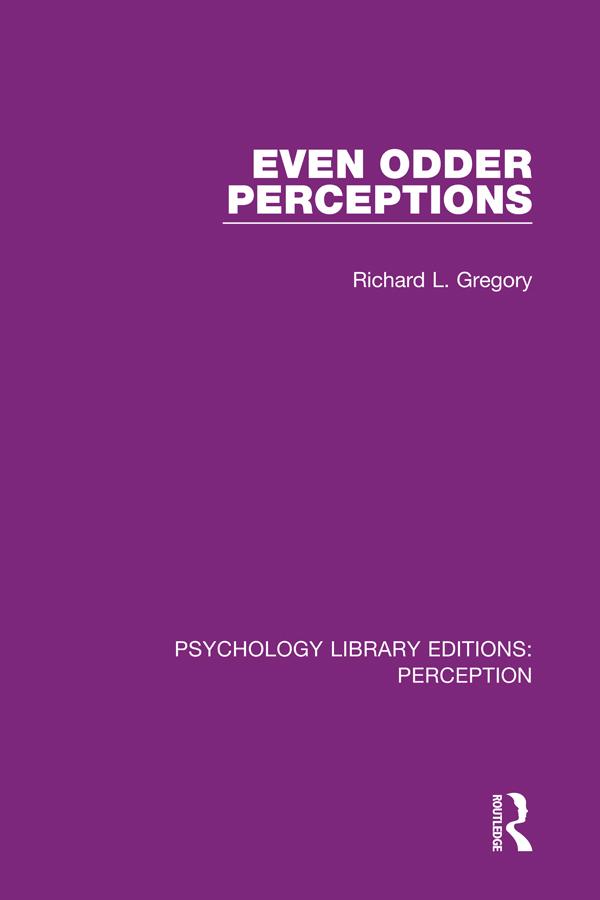
Why did Newton struggle for thirty years to make gold by alchemy – and then become Master of the Mint? Why do we blush? Why do we have illusions?
In this collection of essays, originally published in 1994, Richard Gregory once again delights and tantalizes with tales of his childhood, his family and friends, the famous and the infamous, and weaves them into a rich pattern to illuminate scientific principles and puzzles. If you can put the book down, each essay is complete on its own, but they are united by the magic of human perception. From seeing and hearing to feeling and believing, from the shape of traffic signs to knowledge of quantum mechanics, all our interactions with the outside world are mediated by perception.
Our knowledge is further distilled by the machines which help our own biological mechanisms, like microscopes and telescopes, electric light, and even more powerfully by computer technology. But if the natural structures of perception can affect our interpretation of the world, how much more dramatically might science education and tools of information technology enhance – though sometimes mislead – our perception of reality? Even Odder Perceptions may not have all the answers, but it certainly poses more questions.
Betaal eenvoudig met kaart, Klarna, Apple Pay of Google Pay. Niet tevreden? Je hebt altijd 14 dagen bedenktijd. Lees meer in onze voorwaarden. Heb je vragen, mail ons dan via hello@memmo.org.
Memmo maakt studeren makkelijker – waar je ook bent ter wereld. Wij brengen je cursusboeken en slimme studietools samen op één plek: samenvattingen, quizzen, podcasts en flashcards. En Ted, je studievriend die antwoord geeft op alles wat je je afvraagt. Meer dan 50.000 studenten studeren hier al – gebouwd om je sneller te laten leren en minder stress te geven.