
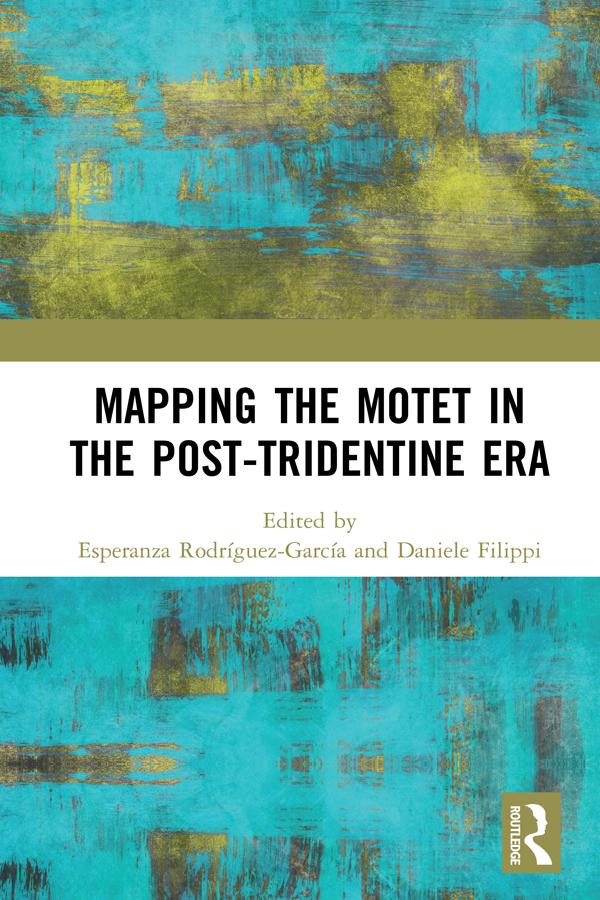
Mapping the Motet in the Post-Tridentine Era provides new dimensions to the discussion of the immense corpus of polyphonic motets produced and performed in the decades following the end of the Council of Trent in 1563. Beyond the genre’s rich connections with contemporary spiritual life and religious experience, the motet is understood here as having a multifaceted life in transmission, performance and reception. By analysing the repertoire itself, but also by studying its material life in books and accounts, in physical places and concrete sonic environments, and by investigating the ways in which the motet was listened to and talked about by contemporaries, the eleven chapters in this book redefine the cultural role of the genre. The motet, thanks to its own protean nature, not bound to any given textual, functional or compositional constraint, was able to convey cultural meanings powerfully, give voice to individual and collective identities, cross linguistic and confessional divides, and incarnate a model of learned and highly expressive musical composition. Case studies include considerations of composers (Palestrina, Victoria, Lasso), cities (Seville and Granada, Milan), books (calendrically ordered collections, non-liturgical music books) and special portions of the repertoire (motets pro defunctis, instrumental intabulations).
Betaal eenvoudig met kaart, Klarna, Apple Pay of Google Pay. Niet tevreden? Je hebt altijd 14 dagen bedenktijd. Lees meer in onze voorwaarden. Heb je vragen, mail ons dan via hello@memmo.org.
Memmo maakt studeren makkelijker – waar je ook bent ter wereld. Wij brengen je cursusboeken en slimme studietools samen op één plek: samenvattingen, quizzen, podcasts en flashcards. En Ted, je studievriend die antwoord geeft op alles wat je je afvraagt. Meer dan 50.000 studenten studeren hier al – gebouwd om je sneller te laten leren en minder stress te geven.