
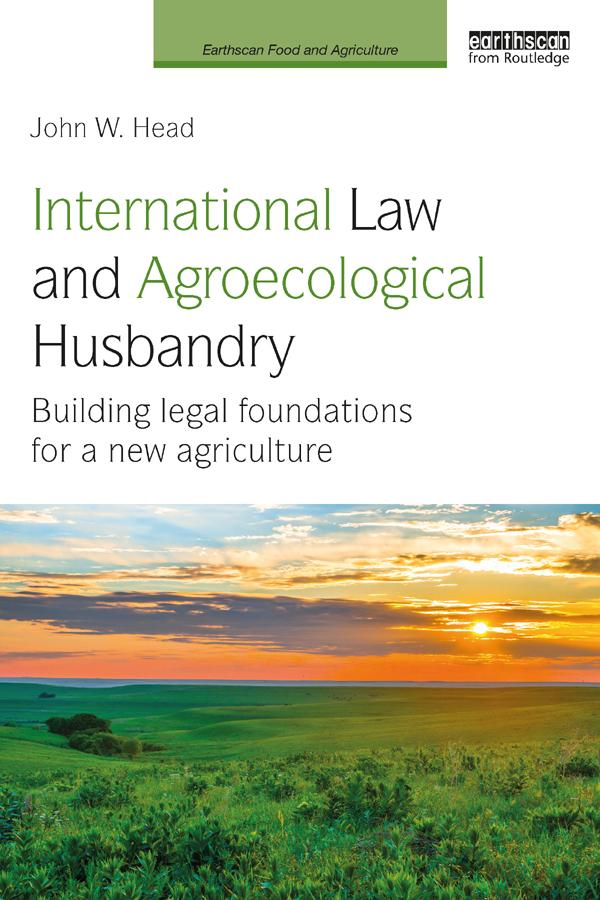
Remarkable advances are being made in life science and agricultural research to reform the methods of food production, particularly with regard to staple grain and legume crops, in ways that will better reflect ecological realities. However, advances in science may be insufficient to ensure that these possibilities for agricultural reform are realized in practice and in a sustainable way. This book shows how these can only be achieved through changes in legal norms and institutions at the global level.
Interdisciplinary in character, the book draws from a range of issues involving agricultural innovation, international legal history and principles, treaty commitments, global institutions, and environmental challenges, such as climate change, to propose broad legal changes for transforming global agriculture. It first shows how modern extractive agriculture is unsustainable on economic, environmental, and social grounds. It then examines the potential for natural-systems agriculture (especially perennial-polyculture systems) for overcoming the deficiencies of modern extractive agriculture, especially to offset climate change. Finally it analyses closely the legal innovations that can be adopted at national and international levels to facilitate a transition from modern extractive agriculture to a system based more on ecological principles. In particular the author argues for the creation of a Global Convention on Agroecology.
Betaal eenvoudig met kaart, Klarna, Apple Pay of Google Pay. Niet tevreden? Je hebt altijd 14 dagen bedenktijd. Lees meer in onze voorwaarden. Heb je vragen, mail ons dan via hello@memmo.org.
Memmo maakt studeren makkelijker – waar je ook bent ter wereld. Wij brengen je cursusboeken en slimme studietools samen op één plek: samenvattingen, quizzen, podcasts en flashcards. En Ted, je studievriend die antwoord geeft op alles wat je je afvraagt. Meer dan 50.000 studenten studeren hier al – gebouwd om je sneller te laten leren en minder stress te geven.