
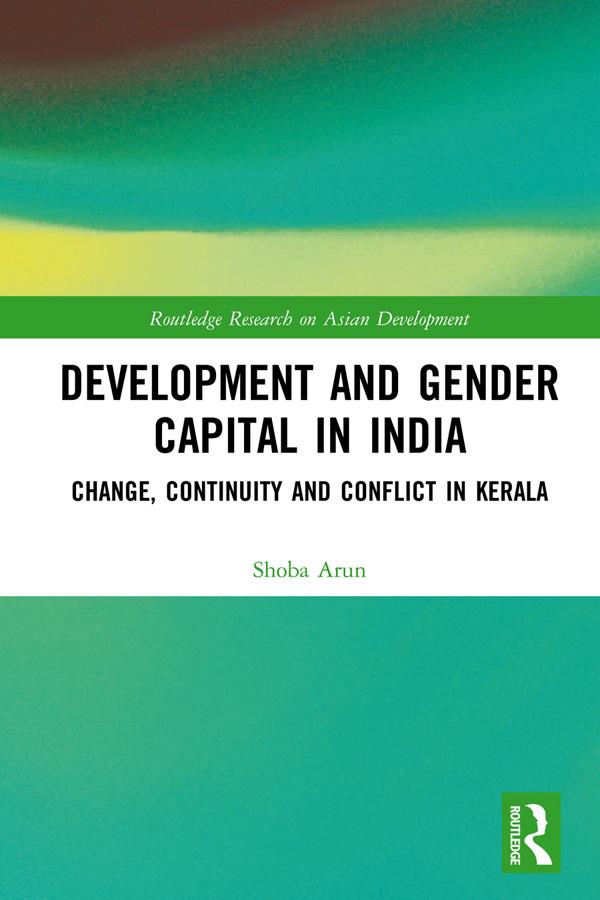
The Indian state of Kerala has invoked much attention within development and gender debates, specifically in relation to its female capital- an outcome of interrelated historical, cultural and social practices. On the one hand, Kerala has been romanticised, with its citizenry, particularly women, being free of social divisions and uplifted through educational well-being. On the other hand, its realism is stark, particularly in the light of recent social changes.
Using a Bourdieusian frame of analysis, Development and Gender Capital in India explores the forces of globalisation and how they are embedded within power structures. Through narratives of women’s lived experiences in the private and public domains, it highlights the ‘anomie of gender’ through complexities and contradictions vis-à-vis processes of modernity, development and globalisation. By demonstrating the limits placed upon gender capital by structures of patriarchy and domination, it argues that discussions about the empowered Malayalee women should move from a mere ‘politics of rhetoric and representation’ to a more embedded ‘politics of transformation’, meaningfully taking into account women’s changing roles and identities.
This book will be of interest to scholars and students of Development Studies, Gender Studies, Anthropology and Sociology.
Betaal eenvoudig met kaart, Klarna, Apple Pay of Google Pay. Niet tevreden? Je hebt altijd 14 dagen bedenktijd. Lees meer in onze voorwaarden. Heb je vragen, mail ons dan via hello@memmo.org.
Memmo maakt studeren makkelijker – waar je ook bent ter wereld. Wij brengen je cursusboeken en slimme studietools samen op één plek: samenvattingen, quizzen, podcasts en flashcards. En Ted, je studievriend die antwoord geeft op alles wat je je afvraagt. Meer dan 50.000 studenten studeren hier al – gebouwd om je sneller te laten leren en minder stress te geven.