
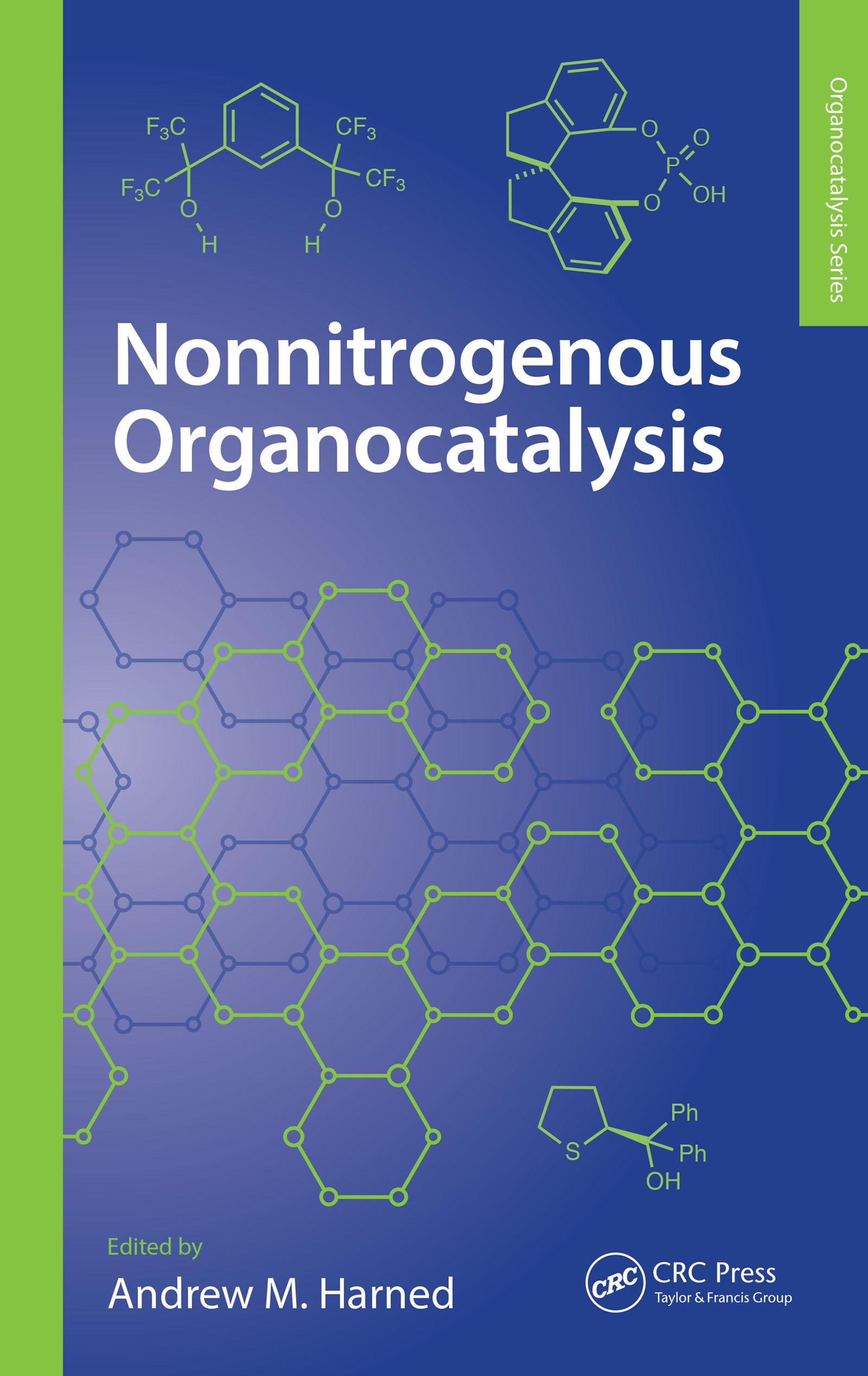
Since the 1990s the synthetic community has shown a growing interest in the development of catalytic reactions that employ entirely organic catalysts – so-called ‘organocatalysts’. With the current emphasis on green chemistry throughout the chemical industry, organocatalysis has become indispensible. In spite of this growth and recognition, there can be a misconception that organocatalysts are only based on nitrogen-containing functional groups (amines, ureas, and quaternary ammonium salts, for example), and are only useful for asymmetric reactions.
Nonnitrogenous Organocatalysis shows that the umbrella of organocatalysis covers other main group elements besides nitrogen, and the coverage is not just limited to asymmetric methods. Many of the catalysts and mechanisms discussed may not have a viable asymmetric variant or cannot be rendered asymmetric at all. This does not make them any less useful, as illustrated in this book.
Betaal eenvoudig met kaart, Klarna, Apple Pay of Google Pay. Niet tevreden? Je hebt altijd 14 dagen bedenktijd. Lees meer in onze voorwaarden. Heb je vragen, mail ons dan via hello@memmo.org.
Memmo maakt studeren makkelijker – waar je ook bent ter wereld. Wij brengen je cursusboeken en slimme studietools samen op één plek: samenvattingen, quizzen, podcasts en flashcards. En Ted, je studievriend die antwoord geeft op alles wat je je afvraagt. Meer dan 50.000 studenten studeren hier al – gebouwd om je sneller te laten leren en minder stress te geven.