
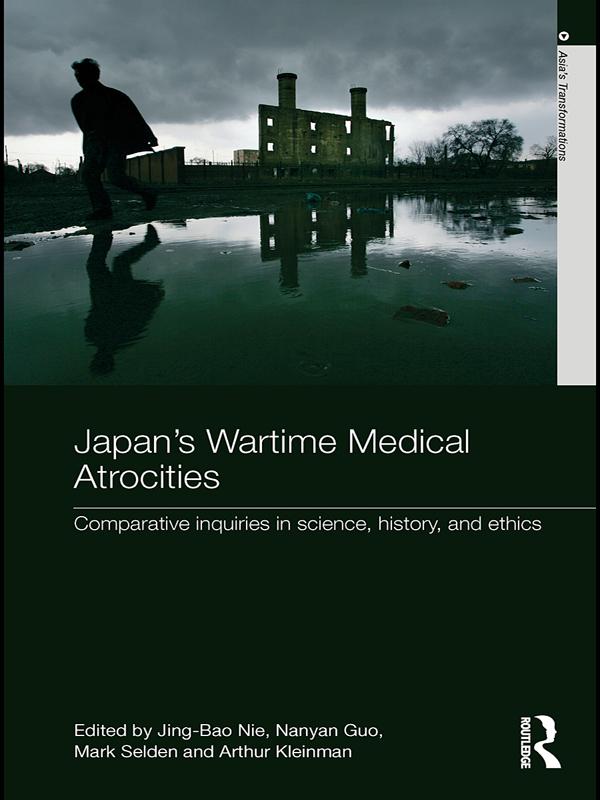
Prior to and during the Second World War, the Japanese Army established programs of biological warfare throughout China and elsewhere. In these “factories of death,” including the now-infamous Unit 731, Japanese doctors and scientists conducted large numbers of vivisections and experiments on human beings, mostly Chinese nationals. However, as a result of complex historical factors including an American cover-up of the atrocities, Japanese denials, and inadequate responses from successive Chinese governments, justice has never been fully served. This volume brings together the contributions of a group of scholars from different countries and various academic disciplines. It examines Japan’s wartime medical atrocities and their postwar aftermath from a comparative perspective and inquires into perennial issues of historical memory, science, politics, society and ethics elicited by these rebarbative events. The volume’s central ethical claim is that the failure to bring justice to bear on the systematic abuse of medical research by Japanese military medical personnel more than six decades ago has had a profoundly retarding influence on the development and practice of medical and social ethics in all of East Asia. The book also includes an extensive annotated bibliography selected from relevant publications in Japanese, Chinese and English.
Betaal eenvoudig met kaart, Klarna, Apple Pay of Google Pay. Niet tevreden? Je hebt altijd 14 dagen bedenktijd. Lees meer in onze voorwaarden. Heb je vragen, mail ons dan via hello@memmo.org.
Memmo maakt studeren makkelijker – waar je ook bent ter wereld. Wij brengen je cursusboeken en slimme studietools samen op één plek: samenvattingen, quizzen, podcasts en flashcards. En Ted, je studievriend die antwoord geeft op alles wat je je afvraagt. Meer dan 50.000 studenten studeren hier al – gebouwd om je sneller te laten leren en minder stress te geven.
Misschien vind je dit ook leuk
Koop het boek0