
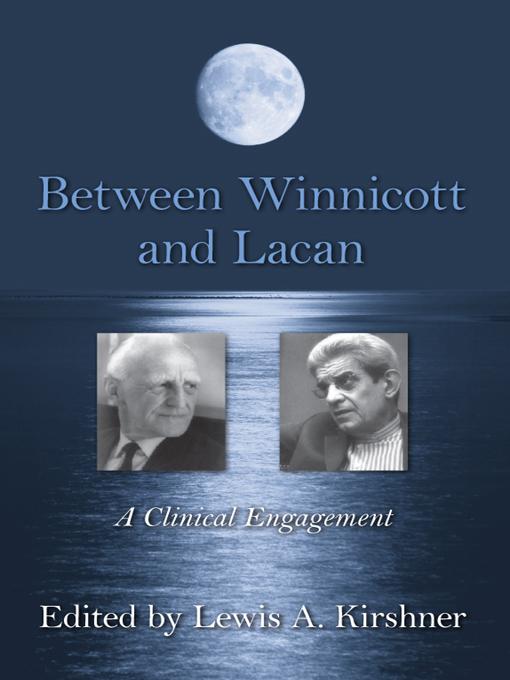
D. W. Winnicott and Jacques Lacan, two of the most innovative and important psychoanalytic theorists since Freud, are also seemingly the most incompatible. And yet, in different ways, both men emphasized the psychic process of becoming a subject or of developing a separate self, and both believed in the possibility of a creative reworking or new beginning for the person seeking psychoanalytic help. The possibility of working between their contrasting perspectives on a central issue for psychoanalysis - the nature of the human subject and how it can be approached in analytic work - is explored in this book. Their differences are critically evaluated, with an eye toward constructing a more effective psychoanalytic practice that takes both relational and structural-linguistic aspects of subjectivity into account. The contributors address the Winnicott-Lacan relationship itself and the evolution of their ideas, and provide detailed examples of how they have been utilized in psychoanalytic work with patients.
Contributors: Jeanne Wolff Bernstein, James Gorney, Andre Green, Mardi Ireland, Lewis Kirshner, Deborah Luepnitz, Mari Ruti, Alain Vanier, Francois Villa .
Betaal eenvoudig met kaart, Klarna, Apple Pay of Google Pay. Niet tevreden? Je hebt altijd 14 dagen bedenktijd. Lees meer in onze voorwaarden. Heb je vragen, mail ons dan via hello@memmo.org.
Memmo maakt studeren makkelijker – waar je ook bent ter wereld. Wij brengen je cursusboeken en slimme studietools samen op één plek: samenvattingen, quizzen, podcasts en flashcards. En Ted, je studievriend die antwoord geeft op alles wat je je afvraagt. Meer dan 50.000 studenten studeren hier al – gebouwd om je sneller te laten leren en minder stress te geven.