
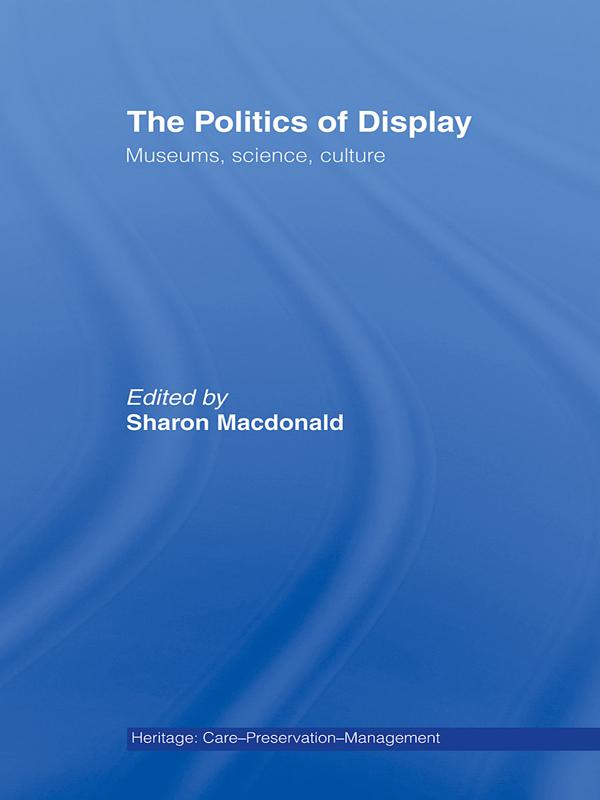
The assumption that museum exhibitions, particularly those concerned with science and technology, are somehow neutral and impartial is today being challenged both in the public arena and in the academy. The Politics of Display brings together studies of contemporary and historical exhibitions and contends that exhibitions are never, and never have been, above politics. Rather, technologies of display and ideas about 'science' and 'objectivity' are mobilized to tell stories of progress, citizenship, racial and national difference. The display of the Enola Gay, the aircraft which dropped the atomic bomb on Hiroshima is a well-known case in point.
The Politics of Display charts the changing relationship between displays and their audience and analyzes the consequent shift in styles of representation towards interactive, multimedia and reflexive modes of display. The Politics of Display brings together an array of international scholars in the disciplines of sociology, anthropology and history. Examples are taken from exhibitions of science, technology and industry, anthropology, geology, natural history and medicine, and locations include the United States of America, Australia, the United Kingdom, France, the Netherlands and Spain.
This book is an excellent contribution to debates about the politics of public culture. It will be of interest to students of sociology, anthropology, cultural studies, museum studies and science studies.
Betaal eenvoudig met kaart, Klarna, Apple Pay of Google Pay. Niet tevreden? Je hebt altijd 14 dagen bedenktijd. Lees meer in onze voorwaarden. Heb je vragen, mail ons dan via hello@memmo.org.
Memmo maakt studeren makkelijker – waar je ook bent ter wereld. Wij brengen je cursusboeken en slimme studietools samen op één plek: samenvattingen, quizzen, podcasts en flashcards. En Ted, je studievriend die antwoord geeft op alles wat je je afvraagt. Meer dan 50.000 studenten studeren hier al – gebouwd om je sneller te laten leren en minder stress te geven.